What Changed and Why It Matters
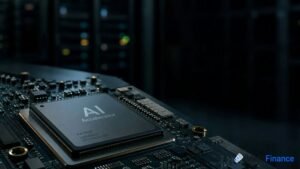
AI workloads no longer fit neatly inside public clouds. Training and inference need massive, steady power and specialized hardware. Demand is outpacing grid capacity and supply chains.
This is pushing a new reality: startups are building or colocating their own AI data centers. Not at hyperscale—but enough to control costs, latency, and risk. Analyses point to AI’s energy intensity, specialized hardware needs, and tighter proximity to networks and users. Even big tech is exploring on-site power to stabilize growth.
Here’s the part most people miss: the bottleneck isn’t GPUs. It’s electrons, permits, and fiber.
The Actual Move
Across the ecosystem, the shift looks like this:
- Startups lease dedicated GPU racks in colocation facilities to guarantee capacity, network proximity, and compliance. They tap direct cloud on‑ramps and carrier-neutral interconnects.
- Some founders pilot micro data centers near talent, users, or cheap power. They prioritize latency for inference-heavy products and cost control for long-running training.
- Providers and hyperscalers are building campuses around reliable power, water, and fiber. Energy constraints are shaping site selection more than ever.
- A growing set of startups target sustainable data center ops: flexible demand management, heat reuse, immersion cooling, and cleaner on‑site generation.
- Policy and community debates are intensifying as AI-driven facilities scale power draw. In response, some companies pair new data centers with dedicated generation to avoid grid delays.
The signal: compute control is becoming a core strategy, not just an IT choice.
The Why Behind the Move
Founders aren’t opting out of cloud. They’re right‑sizing it.
• Model
- Large models demand sustained, predictable power and low-latency fabrics. Colocation with high-density cooling and specialized interconnects beats general-purpose cloud for certain phases.
• Traction
- As inference usage spikes, unit economics matter. Owning or reserving capacity can stabilize costs and improve tail latency for production workloads.
• Valuation / Funding
- Investors now underwrite infra as a moat when it unlocks product defensibility. The trade: higher capex for better margins and differentiated performance.
• Distribution
- Proximity to users and cloud on‑ramps reduces latency and egress. Colos with rich carrier ecosystems become distribution leverage, not just real estate.
• Partnerships & Ecosystem Fit
- Colocation providers offer direct connects to major clouds and networks. Hardware vendors, cooling partners, and energy developers are part of the new stack.
• Timing
- GPU scarcity and grid backlogs are real. Teams that lock in power, space, and fiber now avoid 12–24 month delays later.
• Competitive Dynamics
- The moat isn’t the model—it’s reliable megawatts, low-latency routes, and predictable cost per token. Control over placement and power beats chasing spot capacity.
• Strategic Risks
- Focus creep. Regulatory complexity. Long lead times for power and permits. Hardware obsolescence. And the risk of stranded capex if workloads shift.
The moat isn’t the model — it’s the megawatts.
What Builders Should Notice
- Lock power early. Compute without power is a plan without legs.
- Start hybrid by default. Colocate critical paths; burst to cloud for the rest.
- Design for interconnects. Proximity to cloud on‑ramps and carriers compounds.
- Treat energy as product. PPAs, flexible demand, and thermal design affect margins.
- Measure cost per request, not just GPU hours. Latency and reliability are revenue.
AI favors whoever controls compute, power, and placement.
Buildloop reflection
Clarity compounds when you own your constraints.
Sources
- Reddit — Why are companies racing to build massive AI data centers
- Forbes — Why Data Centers Are Booming—And What They’re …
- Brookings Institution — The future of data centers
- CoreSite — A Complete Newbie’s Primer on the Data Center Ecosystem
- Hacker News (Y Combinator) — So you want to build your own data center
- The Washington Post — Tech companies are building data centers with their own power plants to support …
- NetZero Insights — Five Startups Powering the Next Generation of Sustainable …