What Changed and Why It Matters
The AGI race is converging on a practical form: an Artificial General Engineer. Think systems that can plan, write code, run tests, call tools, fix errors, and ship. Not just chat—build.
Timelines are compressing. Founders and labs talk in years, not decades, as capital and compute stack up around “Stargate”-scale data centers, reasoning models, and agentic tooling. Militaries are reframing AGI as logistics and engineering dominance. Critics warn the race dynamic itself creates risk.
“Demis Hassabis, CEO of Google DeepMind, believes AGI could be possible in five to ten years.”
“Anthropic’s co-founder Dario Amodei predicts AGI could be reached by 2026 or 2027.”
“The people plunging the world toward AGI are saying some very scary things. We’d be wise to pay them heed.”
Here’s the part most people miss: the first useful AGI won’t resemble a general thinker. It will look like an always-on engineer coordinating tools, environments, and workflows across the stack.
The Actual Move
This isn’t a single product launch. It’s a coordinated market shift visible across research, infrastructure, policy, and capital:
- Labs are signaling near-term breakthroughs in reasoning and scaling, with executive briefings leaning into “Stargate”–level compute and acceleration.
- Leaders are framing AGI as a practical capability that engineers, tests, and ships software—autonomously and with tool use—rather than a pure chatbot.
- Defense voices are mapping AGI to hard-power logistics, modeling, and autonomy, cautioning against magical thinking about software alone.
- Researchers and ethicists highlight the race condition: faster release cycles can degrade quality, alignment, and societal guardrails.
- Founders echo the competitive imperative: nobody wants to be second to AGI; 2025 is pitched as a potential inflection year for capability and commercialization.
“Militaries that assume AI alone will solve every problem risk being underprepared for the physical realities of technology development.”
“The problem with a race for an AGI is that it may result in a poor-quality AGI that does not take the welfare of humanity into consideration.”
“According to Luria, heavy investments in AI by big tech companies are driven by the fact that nobody wants to be second in achieving artificial general …”
“An AGI could possess expert-level knowledge across all domains and accomplish complex tasks in minutes that would take humans weeks.”
The Why Behind the Move
Zoom out and the pattern becomes obvious: the quickest path to revenue, power, and advantage is an AI that can build.
• Model
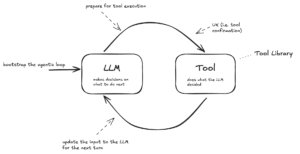
Agentic, tool-using models that plan, code, test, and iterate form the spine of an Artificial General Engineer. Reasoning + long-horizon planning + reliable tool orchestration beat raw chat IQ.
• Traction
Enterprise demand clusters around software delivery, data engineering, test automation, and infra ops. Every saved sprint compounds. The AGE plugs into existing CI/CD and dev tooling.
• Valuation / Funding
Compute megaprojects and capex-heavy cloud partnerships tilt the field toward well-capitalized players. The prize—software margins at machine speed—justifies the burn.
• Distribution
Copilots, IDE integrations, DevOps platforms, and SIs become the channels. The moat isn’t the model—it’s the installed base and workflows.
• Partnerships & Ecosystem Fit
Cloud vendors, chipmakers, and defense integrators are strategic chokepoints. Data rights deals, eval pipelines, and safety tooling round out the stack.
• Timing
Public timelines (2025–2027) and “five-to-ten years” claims pull capital and policy forward. Expect faster productization of planning agents, not just smarter LLMs.
• Competitive Dynamics
Nobody wants to be second. That accelerates releases and raises risk of brittle agents. Labs and platforms race to standardize evals and safety interlocks.
• Strategic Risks
Race dynamics can produce low-quality AGI. Fragile autonomy, data leakage, emergent capabilities, and defense escalation risks loom. Builders will be judged on eval transparency, off-switches, and deployment discipline.
What Builders Should Notice
- Build engineers, not chatbots. Design for plans, tools, tests, retries, and shipping.
- Evals are your contract with reality. Measure planning depth, tool reliability, and end-to-end task success, not just benchmarks.
- Distribution beats cleverness. Win inside IDEs, CI/CD, code hosts, and SI channels.
- Compute is a strategy. Model size, context windows, and tool calls must fit a unit-economics story.
- Safety is a feature. Clear constraints, audit logs, and rollback plans build trust—and defensibility.
Buildloop reflection
“AGI won’t replace engineers—it will become one. Ship accordingly.”
Sources
- Truthdig — The Madness of the Race to Build Artificial General …
- YouTube — OpenAI CFO Sarah Friar on the race to build artificial general …
- Springer Nature — The race for an artificial general intelligence
- Fintech Weekly — The Race Toward Artificial General Intelligence (AGI)
- Reddit (r/Futurology) — Why Big Tech is racing to be first to get artificial general …
- Modern War Institute at West Point — Steel, Sweat, and Silicon: Defense Dominance in the Age …
- Keep the Future Human — Chapter 6 – The race for AGI
- Journal of Artificial Intelligence Research — The AI Race: Why Current Neural Network-based …
- The Guardian — ‘It’s going much too fast’: the inside story of the race to …
- Medium — The Race for AGI: Why 2025 Might Be the Year Everything …