What Changed and Why It Matters
Walmart says it out loud: AI will change almost every job, and revenue can grow without a hiring ramp. Services leaders are seeing the same thing in their dashboards.
“AI will change almost every job.” — Walmart via Yahoo Finance
“AI will change revenue per employee more than most services firms expect.” — LinkedIn post
The signal: revenue per employee is rising. Headcount is not. RevOps is where this shift shows up first—CRM hygiene, forecasting, pipeline risk, and customer personalization are moving from manual to automated. Some teams are even justifying broad cuts as “AI efficiencies.”
Here’s the part most people miss. This is less about net-new tools and more about rewiring day-to-day revenue workflows using AI inside the systems companies already own.
“Growth is decoupling from headcount. The companies that understand this early are building AI contours.” — Revenue Wizards
The Actual Move
- Walmart is positioning to grow revenue without expanding headcount, attributing the shift to AI augmenting work across roles.
- RevOps teams are deploying practical AI in the flow of work:
- Automatic CRM updates, activity capture, and data hygiene
- Churn alerts, risk scoring, and pipeline health monitoring
- Personalized outreach and next-best-action suggestions
- Forecasting assist and deal desk acceleration
- Faster R&D feedback loops feeding product and pricing
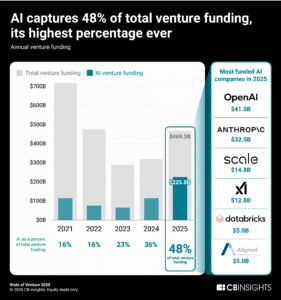
- Operators report workforce “streamlining” to fund AI programs and infrastructure, reflecting a budget shift from labor to leverage.
“Automatic CRM updates to churn alerts—these are the RevOps wins that compound.” — AskElephant.ai
“AI in RevOps aligns teams by automating analysis and surfacing insights.” — Everstage
“It’s about getting more leverage out of the systems you’ve already invested in.” — RevenueOps LLC
Some leaders frame reductions explicitly as AI-enabled efficiency. One engineering manager claims a 25% cut “across the board” with AI as the rationale. Social chatter says companies are offsetting AI costs by trimming roles. The throughline is clear: do more with the same team—or fewer people.
The Why Behind the Move
• Model
AI collapses coordination, documentation, and data-entry costs. It boosts decision quality in forecasting, prioritization, and customer engagement. The unit of work shifts from hours to outcomes.
• Traction
Teams report faster cycle times, cleaner CRM data, higher win rates, and lower CAC. The headline metric: revenue per employee trends up even as hiring stays flat.
• Valuation / Funding
No splashy rounds here—this is operational Alpha. Efficiency gains show up in margins, not in model press releases.
• Distribution
Winners ship where reps already live: Salesforce, HubSpot, email, chat, and call notes. The “copilot in the workflow” pattern outperforms net-new apps.
• Partnerships & Ecosystem Fit
Tight integrations with CRMs, data warehouses, and support suites matter more than model choice. Trust and governance decide adoption.
• Timing
Model quality is “good enough” for RevOps tasks. Infra costs are non-trivial, so budgets shift from headcount to AI to fund the flywheel.
• Competitive Dynamics
Operators who rewire RevOps now gain durable compounding: cleaner data, faster feedback, and better focus. Competitors who freeze hiring but don’t re-architect fall behind.
• Strategic Risks
- Dirty data yields wrong actions at scale
- Hallucinations and over-automation erode trust
- Overcutting creates capability debt and morale drag
- Model and inference costs can outrun savings
- Compliance and PII handling must be designed in, not bolted on
What Builders Should Notice
- Design for revenue per employee, not seats. Make RPE your north star.
- Ship inside the CRM. Distribution beats clever prompts.
- Automate the “between work”: notes, enrichment, handoffs, routing.
- Price on delivered outcomes: cleaner data, reduced cycle time, saved hours.
- Build governance first: audit trails, data lineage, and human override.
- Expect budgets to come from headcount lines. Prove the trade.
Buildloop reflection
“AI doesn’t replace teams. It removes the gaps between them.”
Sources
- Yahoo Finance — Walmart Plans To Grow Revenue Without Hiring More …
- LinkedIn — AI boosts revenue per employee beyond traditional …
- Tech Mahindra — How Generative AI is Driving Revenue Operations to New …
- Reddit — 25% headcount reduction incoming. Is the AI Efficiency …
- AskElephant.ai — 7 Ways AI Is Changing RevOps in 2026
- Revenue Wizards — RevOps in 2026: How AI Is Changing Revenue Operations
- Everstage — The Transformative Power of AI in RevOps
- Facebook — To offset AI prices, companies are streamlining their …
- RevenueOps LLC — How AI Is Changing Revenue Operations