What Changed and Why It Matters
VCs are letting AI do real judgment work. Not just sourcing, but triage, diligence, and portfolio support.
“AI is now involved—as a core capability or a feature—in virtually every tech investment they consider.”
“The fast-evolving and fast-growing AI-native startups are resetting the rules of venture capital.”
The trigger: better models, standardized data rooms, and ruthless competition for speed. Platform teams now run AI pipelines on emails, calendars, product telemetry, codebases, and contracts. The output is cleaner, faster, and more comparable than partner-by-partner instinct.
Here’s the part most people miss: judgment hasn’t vanished. It’s been reallocated. Humans set the questions; AI runs the loops.
“Venture is full of repeatable, data-driven workflows: sourcing talent, pattern-matching startups, assessing traction, making intros.”
The Actual Move
Funds are operationalizing AI across the stack:
- Deal flow: AI agents scrape, cluster, and rank startups against theses and signals.
- Diligence: LLMs parse data rooms, contracts, demos, product analytics, and even code.
- IC readiness: Auto-drafted memos, scenario models, and risk maps speed decisions.
- Portfolio ops: AI-driven GTM experiments, hiring maps, and customer success playbooks.
“AI models can automatically ingest and structure data from various sources (including emails, calendars, and documents).”
What VCs expect from AI startups has shifted too.
“Proof of customer traction and defensibility, i.e., a moat. Superior execution. Hiring.”
“The traditional rules of SaaS investing are being challenged. AI startups require a new kind of diligence.”
Platform teams are now leverage engines.
“They help a firm win competitive deals, help founders execute faster, and also help funds show real leverage.”
Regulation is no longer a footnote.
“VCs are increasingly concerned about regulatory compliance and ethical considerations.”
The Why Behind the Move
AI lets firms compress time to conviction, benchmark more precisely, and compete in winner-take-most markets. The playbook is simple: automate repeatable judgment, keep humans on edge cases and narrative.
• Model
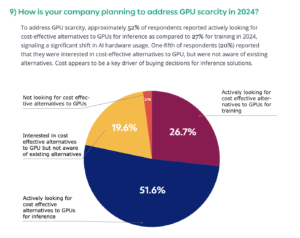
Evaluate model choice, data pipeline, context strategy, and cost-to-quality tradeoffs. Inference costs and latency are first-class metrics. So are evals beyond demo-ware.
• Traction
Log real usage. Show weekly active users, prompt/session depth, retention, and expansion. Synthetic benchmarks help, but production telemetry wins.
• Valuation / Funding
Pricing bakes in model risk, data access, and GTM efficiency. Premiums accrue to proprietary data loops, not just parameter counts.
• Distribution
The moat isn’t the model — it’s the distribution. Prioritize embedded workflows, ecosystem integrations, and partner channels over cold-start SMB spray.
• Partnerships & Ecosystem Fit
Demonstrate durable access: cloud credits, model provider terms, dataset rights, and strategic pilots. Prove you won’t get rate-limited into oblivion.
• Timing
AI cycles move quarterly, not yearly. Ship fast, measure harder, and design for switching risk. Timing is a strategy.
• Competitive Dynamics
Assume model commoditization. Compete on proprietary data, workflow ownership, and compound distribution. Avoid categories where incumbents bundle you away.
• Strategic Risks
- Over-reliance on a single model or provider
- Fragile evals that don’t match real users
- Hallucinations and safety debt
- Privacy, data provenance, and compliance gaps
- Thin margins from runaway inference spend
What Builders Should Notice
- Data moats beat feature velocity. Design for proprietary, compounding data.
- Measure what matters. Define evals that correlate with retention and revenue.
- Ship distribution. Integrations and workflows outlast model wins.
- Control unit economics. Track cost per task, not just GPU burn.
- Treat compliance as product. Clear policies now lower financing risk later.
Buildloop reflection
AI rewards speed — but only when paired with proof.
Sources
- Built In — Here’s What VCs Want to See Before They Fund Your AI …
- Harvard Business Review — How Generative AI Is Reshaping Venture Capital
- GoingVC — VC Platform in the Age of AI
- Medium — The New Frontier: How VCs Will View AI-Only Startups in 2026
- The CapTable — First startups, now VCs: AI is rewriting the traditional …
- F-Prime Capital — RIP Old VC Playbook: How Investors Are Changing AI …
- LinkedIn — Why VCs are next on AI’s chopping block
- Forbes — RIP Old VC Playbook: How Investors Are Rethinking AI Startups’ Diligence