What Changed and Why It Matters
Grounding has moved from optional to mandatory. Enterprises now accept that agents without access to trusted data and tools hallucinate, stall, or misfire.
Industry voices are converging on the same point: build knowledge infrastructure first, then scale agents. Research expands that idea further—true intelligence needs more than text and tables. It needs perception, feedback, and context from the real world.
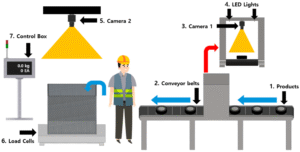
The shift underway: from data grounding (RAG, tools, knowledge graphs) to sensory grounding (vision, audio, telemetry, spatial state). As agents become more autonomous, they need richer signals to decide, verify, and act safely.
Most people focus on bigger models. The real unlock is better grounding.
The Actual Move
This isn’t a single product launch. It’s a system-level pivot across research, platforms, and enterprise data stacks.
- Forrester argues the battle is about knowledge capacity—investing in internal knowledge infrastructure so agents can be grounded and governed. The message: your data systems are now part of the AI product surface.
- Salesforce’s Trailhead module teaches teams the basics of grounding agents with the right data types and connections. The tooling and enablement wave has begun.
- The New Stack details how to connect agents to accurate, context-rich enterprise data at the right time. It highlights retrieval, search, and orchestration as first-class capabilities.
- Data platforms like K2view push grounding as a way to reduce hallucinations and raise trust, advocating unified views and data fabric patterns for secure, governed access.
- Practitioner explainers (YouTube) push grounding as the fix for out-of-date or made-up answers, normalizing the practice across teams.
- ODSC synthesizes techniques—RAG, tool use, programmatic grounding, knowledge graphs—codifying the toolbox builders actually use.
- Research threads fill in what’s next. One academic line formalizes grounding as linking language to sensorimotor experiences and internal states. Another explores how future networks (e.g., 6G) and edge compute could enable embodied, real-time sensory grounding at scale.
- Strategy essays on agentic AI sketch the opportunity: autonomous workflows that read, reason, simulate, and act. Grounding is what makes those loops safe and useful.
The ecosystem message is consistent: without grounding, agents are clever text machines. With grounding, they become dependable systems.
The Why Behind the Move
Builders aren’t chasing novelty. They’re optimizing for reliability, control, and speed-to-value.
• Model
- Multimodal models give agents eyes, ears, and spatial sense. That enables verification and tool choice beyond text.
- Sensory grounding adds real-world feedback loops, improving calibration and reducing compounding errors.
• Traction
- Early RAG wins proved value but hit ceilings in ambiguity, context depth, and change latency. Sensory inputs enlarge the context window with reality itself.
• Valuation / Funding
- The next defensibility layer isn’t just better LLMs. It’s proprietary, permissioned, and perceptual data pipelines—hard to replicate, core to enterprise value.
• Distribution
- Platforms with connectors, governance, and observability will own distribution. Grounding becomes a services and integration wedge into every workflow.
• Partnerships & Ecosystem Fit
- Expect tighter loops between data platforms, device/IoT vendors, observability tools, and AI stacks. Digital twins and simulations become training wheels for safe autonomy.
• Timing
- Enterprises are ready: data fabrics, vector search, and access controls are maturing. Meanwhile, edge compute and future networks set the stage for real-time sensory flows.
• Competitive Dynamics
- Hyperscalers control model and infra. Data platforms control enterprise context. Device networks control sensory streams. The winners stitch these layers into dependable agents.
• Strategic Risks
- Privacy, security, and data sovereignty. Sensor spoofing and adversarial inputs. Grounding drift without monitoring. Vendor lock-in at the data layer. Solve these early.
Here’s the part most people miss: grounding is not a feature. It’s an operating architecture.
What Builders Should Notice
- Design the grounding stack first. Retrieval, tools, provenance, and policy gates are day-zero concerns—not add-ons.
- Treat observability like safety equipment. Log prompts, citations, sensor inputs, and decisions end-to-end.
- Multimodal is practical, not flashy. Vision, audio, and telemetry close verification gaps text can’t.
- Simulate before you actuate. Use digital twins and sandboxes to prove loops before touching production systems.
- Trust compounds into moat. Clear provenance, permissions, and fallback behavior become your differentiators.
Buildloop reflection
The moat isn’t the model. It’s the grounded loop between data, perception, and action.
Sources
- Forrester — The Battle For Grounding Your AI Agents Has Begun
- arXiv — Grounding for Artificial Intelligence
- Salesforce Trailhead — Understanding Grounding for AI Agents and Data
- LinkedIn — The Battle For Grounding Your AI Agents Has Begun
- Medium (ODSC) — What is Grounding in AI and What are the Best Techniques?
- The New Stack — How to ground AI agents in accurate, context-rich data
- K2view — Grounding AI reduces hallucinations and increases …
- YouTube — Grounding AI Explained: How to stop AI hallucinations
- Substack — Agentic AI: The Key to Unlocking Innovation Power
- TechRxiv — AI Embodiment Through 6G: Shaping the Future of AGI