Some Tesla shareholders want the company to invest in xAI, Elon Musk’s AI startup. The ask sounds simple. It isn’t.
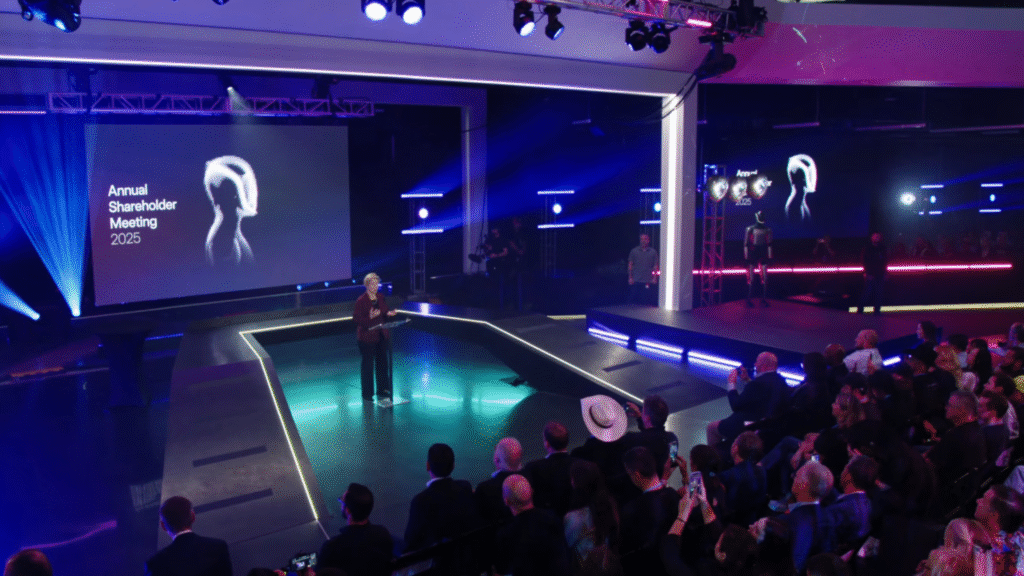
This is not about whether Tesla can invest. It’s about how the deal is built, governed, and shipped into product. That’s where value is made or destroyed.
What changed and why it matters
xAI moved fast in 2024–2025. It raised billions, shipped Grok, and leaned into frontier model research at consumer scale. Tesla is pushing autonomy, energy, and robotics, with Dojo, a massive GPU footprint, and a real-world data flywheel.
Shareholders see a clean story: align Musk’s incentives, tap xAI’s model stack, and move faster than OpenAI, Google, and Apple tie-ups.
The truth is messier. This is a related-party deal. Synergy can turn into shadow subsidies overnight. Great founders respect that tension and design around it.
The product angle: model, data, distribution
AI strategy is simple on paper:
- Model: xAI is building frontier LLMs and multimodal systems (Grok).
- Data: Tesla has unmatched real-world driving, factory, and robot data.
- Distribution: Tesla ships to millions of vehicles and devices; xAI ships across X.
The overlap is tempting. The risks are real. Culture and cadence differ. Tesla ships hard, safety-critical systems. xAI iterates consumer AI. A good deal respects that difference.
Five viable structures (ranked by focus and governance strength)
1) Pure commercial license (no equity)
- License xAI models for in-car assistant, factory copilots, and support tools.
- Automotive exclusivity to Tesla; strict IP carve-outs.
- Clear SLAs, MFN pricing, and performance milestones.
2) Compute-for-equity swap
- Tesla provides GPU capacity (Dojo/NVIDIA clusters) plus infra tooling.
- xAI grants a small equity stake and long-term, cost-plus pricing.
- Joint capacity plan; utilization targets; no open-ended resource drains.
3) Autonomy JV (narrow scope)
- Joint team on a multimodal autonomy foundation model.
- Tesla owns automotive/robotics IP; xAI gets a license outside those domains.
- Data governance: ring-fenced, audit-logged, opt-in only.
4) Minority equity with hard guardrails
- 5–10% stake over milestones, approved by an independent board committee.
- Third-party fairness opinion; no side letters; full disclosure.
- Non-compete in automotive; MFN across inference costs.
5) Strategic non-deal (coordination, not capital)
- Focus Tesla on autonomy, energy, Optimus.
- Integrate best-of-breed models as vendors compete.
- Keep Musk’s time balanced via clear board charters, not cross-ownership.
Metrics that actually matter
- In-car AI time-to-ship: prototype to fleet rollout in months, not years.
- FSD attach and retention: assistant lifts engagement and safety metrics.
- Inference unit economics: cost per vehicle per month, trending down.
- GPU utilization: >80% steady-state, vs. capex bloat.
- Safety deltas: measurable reduction in interventions and incidents.
- IP clarity: zero cross-claims; annual third-party audits.
If a term doesn’t move these numbers, it’s theater.
Governance is the strategy
Related-party deals are not evil. They’re just loud. Treat them like radioactive material: useful when contained.
- Independent special committee, empowered to say no.
- Transparent disclosures and a third-party fairness opinion.
- Hard limits on shared staff, compute, and data. All tracked, all billable.
- Automotive exclusivity for Tesla if equity changes hands.
- Privacy and consent by design; no silent data flows.
- Sunset clauses and clawbacks if milestones miss.
If Tesla can’t explain the deal in a single 10-K page, the deal isn’t ready.
Strategy in the current AI market
Everyone is pairing up. Microsoft–OpenAI, Google–Anthropic, Amazon–Anthropic, Apple–OpenAI, and Meta’s open-weight push all signal the same thing: speed requires leverage.
Tesla’s leverage is special: a live, sensor-rich fleet, custom inference pathways, and a hardware culture that actually ships. xAI’s leverage is talent and a growing model stack at internet scale. Put them together without governance and you get chaos. With governance, you get compounding advantage.
Founder lessons
- Structure beats vibes. Good deals make focus sharper, not fuzzier.
- Earn your integration. License first; invest when the product fit is proven.
- Scarcity is real: compute, time, and attention. Price all three.
- Put numbers on synergy. If you can’t measure it, you can’t manage it.
- Related-party means over-communication. Sunlight is part of the product.
- Align on where the model runs: edge, car, cloud. That choice sets the bill.
My take: what I’d ship first
Start with a commercial license for an in-car assistant and factory copilots. Tight SLAs, tight privacy, automotive exclusivity.
Run a 90-day pilot on a subset of the fleet. Track safety, latency, and cost. If the metrics hit, explore compute-for-equity with strict caps and MFN pricing. Only then consider minority equity with a sunset and clawbacks.
Earn the right to make it permanent by shipping real wins.
Buildloop reflection
Bold moves attract momentum. Smart structures compound it.
Sources
- Some Tesla Shareholders Want It to Invest in xAI
- Tesla investors vote on an $878 billion payday for Musk
- Tesla shareholders should reject Musk’s $1T
- Elon Musk Wants Tesla To Back xAI — But Leaves It To
- Tesla shareholders approve $1-trillion pay package for
- If it was up to me, Tesla would have invested in xAI long ago