What Changed and Why It Matters
AI training is running into Earth’s limits: power, cooling, land, and grid constraints. A new idea is getting real attention—move training to orbit.
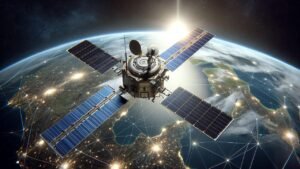
Google’s research team outlined Project Suncatcher, a space-based AI infrastructure concept. Startups like Starcloud say they’re launching GPU clusters to space. Analysts argue Earth Observation may become the first in-orbit compute beachhead.
Why it matters: space offers near-constant solar power and vacuum cooling. Optical links enable high-throughput data movement. Launch costs are falling. The combination makes orbital training less speculative and more like an inevitable extension of cloud.
“In the future, space may be the best place to scale AI compute.”
Here’s the part most people miss: the opportunity isn’t just “more power.” It’s a new compute tier optimized for batch training, edge-to-space processing, and missions that never touch a terrestrial data center.
The Actual Move
Google Research introduced Project Suncatcher, a moonshot architecture for space-based, scalable AI compute. Public write-ups describe solar-powered satellites running accelerators (e.g., TPUs), with terabit-class optical links to shuttle data and checkpoints. Some reporting points to a potential 2027 demo with an Earth imaging partner.
On the startup side, Starcloud describes orbital data centers with GPU clusters designed for sunlight-rich orbits and laser interconnects. A pathfinder mission (often referenced as Starcloud-1) is framed as an early proving ground. A widely shared post claims “H100s are leaving Earth,” signaling commercial momentum.
Ecosystem observers (Per Aspera, Spectral Reflectance, and others) sketch near-term use cases:
- On-orbit preprocessing for Earth Observation, cutting downlink volumes.
- Batch training and fine-tuning jobs that tolerate latency.
- Shared orbital “compute hubs” serving multiple space missions, cloud-like but above the atmosphere.
A white paper circulating in the community argues that orbital data centers can scale linearly with abundant solar and radiator area.
“Orbital data centers unlock next-generation clusters … with power generation well into the GW range.”
There’s also speculation that launch providers and satellite networks could integrate compute into future constellations, merging communications and AI training into one stack.
The Why Behind the Move
This is a strategy story, not a stunt. The drivers look familiar to anyone building at the edge of compute limits.
• Model
Training demand is exploding faster than terrestrial capacity can grow. Space offers near-continuous solar energy, high radiator efficiency in vacuum, and line-of-sight lasers for inter-satellite and ground links. It’s a physics arbitrage.
• Traction
We’re early. Expect pathfinders that prove power, thermal, radiation tolerance, and reliable data movement before multi-satellite clusters become routine. Earth Observation is likely the first “must-have” customer, compressing imagery on orbit.
• Valuation / Funding
Moonshot economics apply. Hyperscalers explore to derisk the architecture. Startups court strategic capital from space, energy, and cloud partners. The upside story is capex-heavy but compounding if utilization is high.
• Distribution
Winners will integrate seamlessly with ground clouds. Think: S3 ingress/egress equivalents, checkpoint syncing, and “train-in-space, serve-on-Earth” workflows. Batch jobs and scheduled transfers minimize latency costs.
• Partnerships & Ecosystem Fit
This stack requires launch providers, bus manufacturers, optical comms, radiation engineering, and cloud interop. Expect alliances with Earth imaging firms and satellite networks to prove utility early.
• Timing
Launch costs are trending down. Space lasers are maturing. Data center power scarcity is rising. Policy pressure for clean energy is intensifying. The window is now.
• Competitive Dynamics
Hyperscalers vs. space-native startups will collide—and collaborate. Launch incumbents can vertically integrate. Cloud incumbents can bundle orbital tiers. The moat won’t be chips—it’ll be orchestration, uptime, and bandwidth economics.
• Strategic Risks
- Latency and bandwidth: not every workload fits.
- Radiation and reliability: COTS accelerators need protection.
- Servicing and repair: failures are expensive in orbit.
- Debris and end-of-life: regulatory pressure will be high.
- Security, export controls, spectrum: policy risk is real.
- Capex intensity: utilization must justify lift and hardware.
What Builders Should Notice
- Design for physics arbitrage. Where energy and cooling are abundant, new architectures emerge.
- Batch is a feature. Not all AI needs low latency—optimize for throughput and schedule.
- Distribution is the moat. Seamless cloud integration beats raw FLOPS.
- Prove with a niche. Earth Observation preprocessing is a pragmatic first customer.
- Regulation is product. Debris, spectrum, and export controls belong in your roadmap.
Buildloop reflection
The frontier isn’t a place—it’s an interface. Build for the handoff.
Sources
- Google Research — Exploring a space-based, scalable AI infrastructure system
- Medium — AI Data Centers in Space: Why the Future of Computing Is Leaving Earth
- Spectral Reflectance — The Cloud’s Final Frontier: Orbital Data Centers and the …
- Starcloud (White Paper) — Why we should train AI in space
- LinkedIn — Wild: NVIDIA GPUs are now literally leaving Earth
- FOMO AI — The AI Cloud Is Leaving Earth
- Medium — The Secret Plan to Build AI Data Centers in Orbit
- Per Aspera — Realities of Space-Based Compute
- BinaryVerse AI — Project Suncatcher: Google’s Plan To Power The Future …