What Changed and Why It Matters
Plaud is turning AI note‑taking into a hardware‑led category. The company moved from a simple recording companion to a dedicated device plus app, then unveiled a Pro version centered on real‑time human‑AI interaction.
The signal: capture is becoming the new interface for work. Meetings, lectures, and interviews are the primary surface area where AI can create immediate value. Owning the capture layer means owning the workflow.
“Trusted by 1,000,000+ users worldwide, Plaud Note is the world’s No.1 AI note‑taking device.”
That claim, paired with a fresh device launch and a paid plan, points to a global land‑grab. The strategy isn’t model first. It’s distribution, UX, and routines.
Here’s the part most people miss: AI utility compounds at the point of capture, not after. If your device becomes the default start button for conversations, you control the downstream stack.
The Actual Move
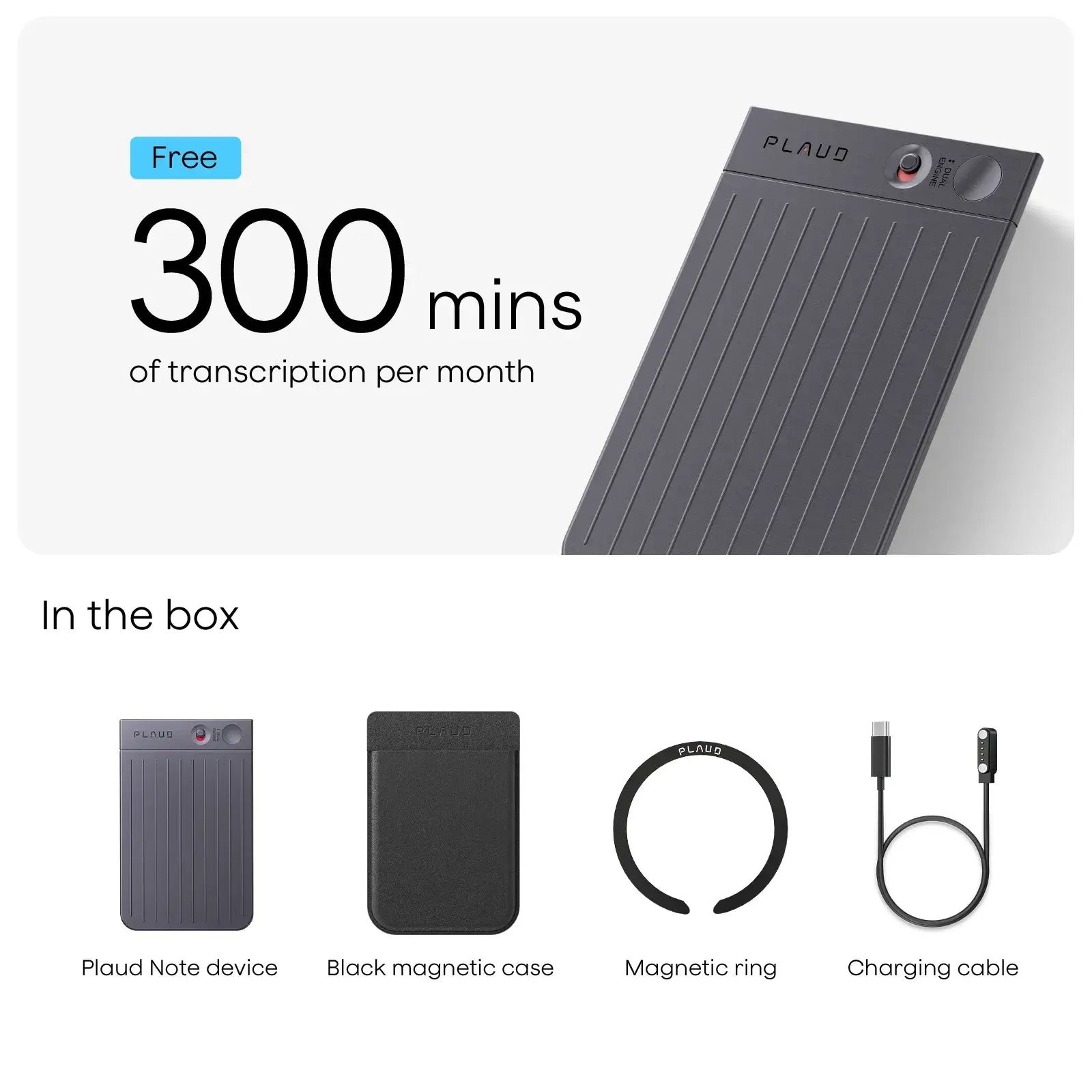
Plaud’s baseline device records high‑fidelity audio and turns it into precise transcripts for meetings. It’s a separate device, yet tethered to your phone, so it rides your existing workflow without replacing it.
“We’re going to be talking about the Plaud AI Note today which is a note‑taking device separate to your smartphone although still connected to it.”
The company then introduced Plaud Note Pro. Ahead of launch, Plaud ran a waitlist and pre‑orders, signaling demand testing and community building. The Pro model brings a revamped microphone system and a new on‑device interaction pattern.
“The newly launched Plaud Note Pro features a brand new human‑machine interaction to achieve real‑time human‑AI alignment. The on‑device ‘Press …’”
Users also flag Plaud’s “AI‑Beamforming” microphone setup in the Pro generation, aimed at better voice capture in noisy rooms.
“The company talks about some kind of ‘AI‑Beamforming’ with its new microphone system… I can tell the difference.”
Plaud runs a companion app on iOS. The listing makes the mission explicit:
“With a mission to amplify human intelligence, Plaud is building the next‑generation intelligence infrastructure and interfaces to capture, extract, and utilize …”
On business model, reviewers call the hardware strong but the subscription meaningful:
“Plaud’s Note is fantastic as a dedicated AI‑enabled recorder — but the $20 monthly fee makes me question its usability.”
In short: hardware for capture, an app for organizing, and a subscription for ongoing AI features.
The Why Behind the Move
• Model
Hardware + software + services. The device becomes the default capture point; the app handles transcripts; the subscription sustains the AI features. This reduces pure model risk and anchors retention in routine use.
• Traction
Plaud publicly claims 1M+ users. A visible waitlist and active community chatter signal momentum. External reviews highlight strong capture quality.
• Valuation / Funding
No funding data surfaced here. But the footprint (hardware SKUs, app distribution, PR cadence) implies capital invested in supply chain and software.
• Distribution
Two prongs: social proof + app stores. Facebook scale claims. An iOS app lowers onboarding friction. A portable device that clips into your day sneaks into every meeting.
• Partnerships & Ecosystem Fit
iOS presence matters. It gives Plaud a credible endpoint for transcripts, summaries, and sharing with tools teams already use. The “tethered” approach piggybacks on the phone’s connectivity.
• Timing
Real‑time AI is ready enough for note‑taking. Latency and accuracy are acceptable in structured speech. Moving now captures the habit before OS‑level features fully close the gap.
• Competitive Dynamics
Software‑only note services compete on models and UI. Phone makers and conferencing apps can bundle transcription. Plaud’s answer: win the capture edge with dedicated hardware and better mics, then layer AI on top.
• Strategic Risks
- Subscription fatigue at $20/month is real.
- OS‑level transcription could erode differentiation.
- Privacy expectations for always‑on capture are high.
- Hardware cycles require margin discipline and forecasting.
Zoom out and the pattern becomes obvious: Plaud is optimizing for default status in the capture moment. If they win that slot, everything downstream (summaries, action items, search) becomes an attach.
What Builders Should Notice
- Own the start button. Control capture, and you control the workflow.
- Hardware can be a distribution hack when the job is physical (audio in rooms).
- Subscriptions must map to recurring value, not just recurring access.
- Ship the interaction, not just the model. Press‑to‑align beats abstract prompts.
- Claims drive curiosity; proof drives retention. Let the mic do the talking.
Buildloop reflection
“Every durable AI product starts where reality enters the system: at capture.”
Sources
Plaud — Plaud Note AI Note Taking Device
YouTube — Inside the Plaud AI Note Device: Can It Replace Your …
Facebook — Plaud: The World’s Most Popular AI Note-Taking Device
Reddit — For anyone on the fence about the Plaud Note Pro, here …
Plaud — Plaud Note Pro
PR Newswire — Plaud launches Plaud Note Pro: The world’s first AI note- …
Apple App Store — Plaud: AI Notetaker – App Store
Android Central — I used Plaud’s AI note-taker, and it’s much better than …