What Changed and Why It Matters
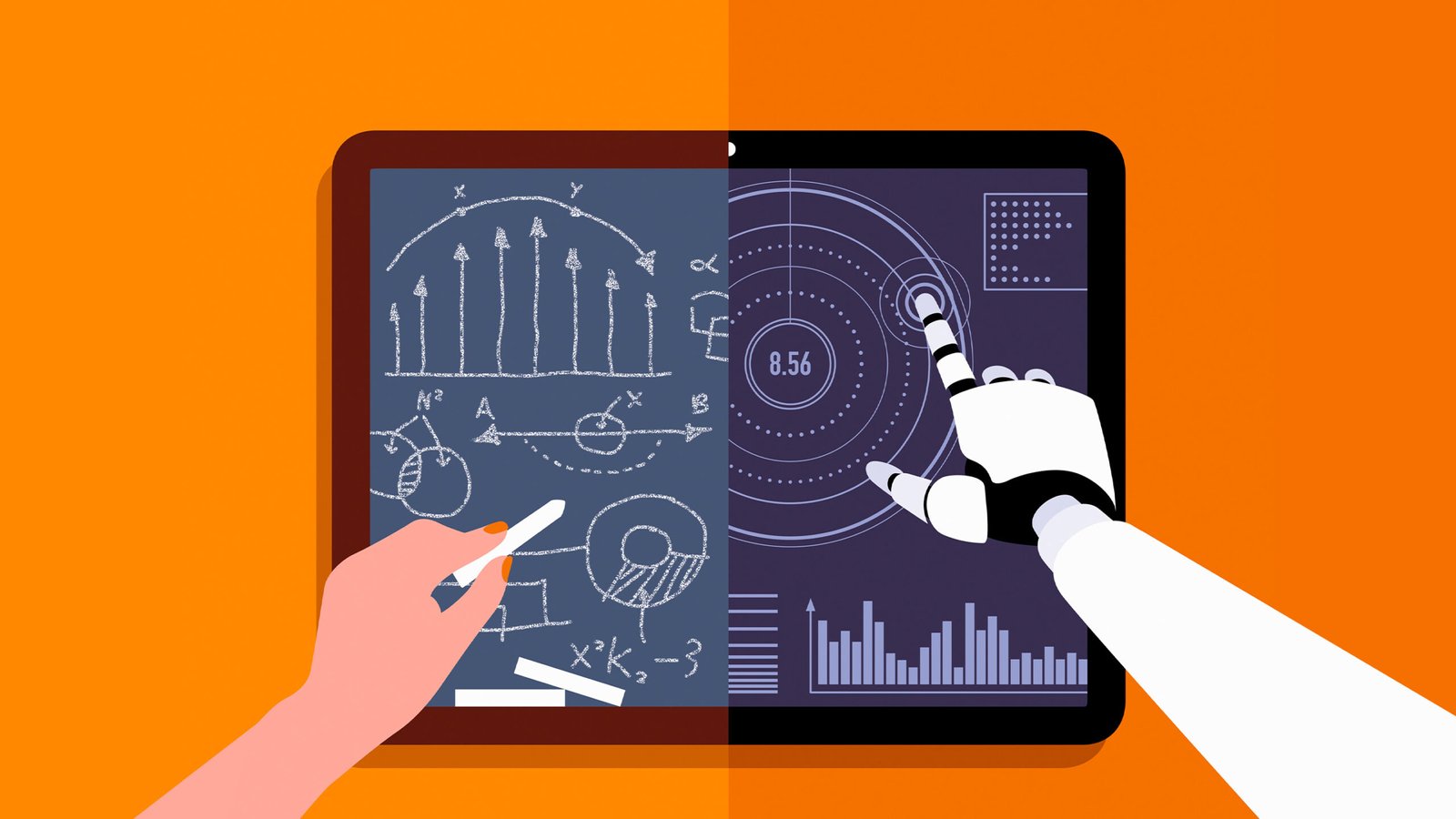
Handwriting-native AI for math is crossing from novelty into infrastructure. Mathpix, Goodnotes, OneNote, MyScript, and new APIs now convert messy ink to structured math, then solve, quiz, or even grade.
This matters because the math workflow is finally end-to-end. Students write naturally. AI recognizes structure. Tools generate LaTeX, typed equations, practice sets, and feedback. The old bottleneck—getting math out of handwriting—just got removed.
Here’s the part most people miss: the wedge isn’t “OCR.” It’s workflow ownership. Whoever controls handwriting-to-action will own study loops, assessment flows, and knowledge capture in STEM.
The Actual Move
- Mathpix is staking a precision claim:
“Mathpix has the most accurate image-based handwriting recognition for STEM with a long tail of functionality.”
Translation: their OCR/structure engine turns handwritten math into high-fidelity, machine-usable output (think LaTeX/MathML) and ships via API/SDK.
- Goodnotes 6 pushed AI into mainstream note-taking:
“You’re getting AI features for handwriting, as well as AI-powered math assistance, and AI typing tools.”
Inside a dominant iPad app, math help now lives where students already write.
- Microsoft OneNote’s Math Assistant operationalizes the loop:
OneNote can convert “Ink to Math,” then generate a “practice quiz.” That’s recognition → instruction → assessment in one surface.
- MyScript expands surface area:
“You can now convert handwriting to math across boards, PDFs, and notebooks!”
The same math ink works anywhere a user writes, not just in a special canvas.
- New APIs lower the build barrier:
“MathHandwriting is an AI-powered tool designed to convert handwritten mathematical equations into digital LaTeX code via an API.”
Any app can bolt on math handwriting conversion without owning the model.
- Assessment is catching up:
“This study evaluates the effectiveness of a pre-trained GPT-4 model in grading semi-open handwritten responses in a university-level mathematics exam.”
Pair robust handwriting recognition with LLMs, and grading becomes tractable—at least for semi-open math.
- The research playbook is clear:
A recent paper outlines a familiar UX (“lasso to select, then convert”), backed by AI that maps ink to structured math. That’s the canonical pattern users already understand.
The Why Behind the Move
- Model: Vision-language models and specialized recognizers now reliably parse structure, not just characters. STEM-specific training yields higher accuracy and confidence outputs.
- Distribution: Note apps (Goodnotes, OneNote, MyScript) own daily workflows. Adding math AI there collapses friction and boosts retention. APIs (Mathpix, MathHandwriting) expand reach through developers.
- Go-to-market: The wedge is simple—“convert ink to math.” The expansion is sticky—solve steps, generate quizzes, export LaTeX, grade answers. Each adds compounding value.
- Ecosystem fit: iPad + stylus is default in many classrooms. Handwriting is the native modality. Meeting users where they already work beats forcing LaTeX or clunky equation editors.
- Timing: Remote/hybrid learning normalized digital submission. Educators need scalable feedback loops. AI grading and practice generation close the loop from capture to mastery.
- Competitive dynamics: Accuracy and latency are the moat. Best-in-class recognition paired with downstream actions (solve, quiz, grade) creates end-to-end defensibility. Platform players will bundle; specialists must out-perform or out-partner.
- Strategic risks: Academic integrity, privacy, and over-reliance on AI feedback. Messy edge-case handwriting can still fail silently. Builders need transparent confidence scores, human-in-the-loop options, and clear policy guardrails.
What Builders Should Notice
- The sharp wedge wins: “Ink to Math” is the simplest door into a complex stack.
- Recognition isn’t enough. Pair it with actions—solve, quiz, grade—to own outcomes.
- Distribution > invention. Ship where handwriting already lives (notes, whiteboards).
- APIs create a long tail. If you can’t be the app, be the infrastructure.
- Accuracy is product. Confidence, editability, and graceful fallback matter more than features.
Buildloop Reflection
“Great AI products remove one hard step. Then they keep removing steps until the workflow disappears.”
Sources
- Mathpix — Handwriting Recognition
- Goodnotes — AI Note-Taking, AI Math Assistance, Dynamic Templates & …
- IJSRET — Math Handwriting Conversion Using AI Approach
- Apple App Store — MyScript Notes: AI Handwriting – App Store
- arXiv — AI-assisted Automated Short Answer Grading of …
- Microsoft Support — Create math equations using ink or text with Math Assistant in OneNote
- FutureTools — MathHandwriting