What Changed and Why It Matters
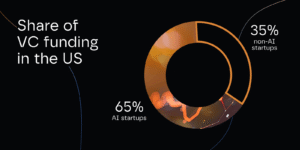
Reports across founder circles and industry posts suggest an AI coding startup has crossed, or is targeting, a $1.5B valuation. Others in adjacent enterprise AI—cloud security and India-focused foundation models—are lining up at the same mark. The pattern is clear: enterprise AI tooling is now valued like core infrastructure.
Why it matters: enterprise buyers are moving from pilots to platforms. Time-to-unicorn is collapsing as AI assistants plug directly into developer workflows, show measurable productivity, and slot cleanly into existing budgets.
“Over 40% of AI unicorns now hit $1B+ in under 24 months.”
“According to PitchBook, the enterprise AI market alone is valued at $43B in 2023.”
This isn’t about model novelty. It’s about workflow penetration, trust, and distribution.
The Actual Move
Here’s what surfaced across the ecosystem:
- Multiple social and investor posts point to an AI coding startup at a ~$1.5B valuation. Mentions include Magic (AI coding automation) and Anysphere (the team behind Cursor’s developer experience), signaling unicorn territory for enterprise-grade coding agents.
- Cloud security player Upwind is in talks to raise $250M at a $1.2–$1.5B valuation. Different vertical, same enterprise AI tailwinds: automated reasoning over complex infra and developer-centric adoption.
- In India, Sarvam AI is reportedly raising ~$300M at a ~$1.5B valuation, underscoring how non-U.S. enterprise AI stories are scaling fast.
- Founders are also amplifying “agentic coding” entrants like Emergent. The pitch: autonomous agents that build, test, and deploy apps end-to-end.
- Counter-signal: Microsoft-backed Builder.ai filed for insolvency after claims its “neural network” was largely human labor. The market is rewarding real automation, not AI theater.
“A $1.5B AI unicorn just collapsed… its entire ‘neural network’ turned out to be 700 human engineers.”
“Perplexity reached unicorn status; the list of unicorns is expanding and updating fast.”
Net: investors are bidding up credible AI dev tools that prove real lift inside enterprise workflows, while the market punishes anything that can’t clear the trust bar.
The Why Behind the Move
Zoom out and the pattern becomes obvious. Enterprise AI coding tools are moving from novelty to necessity. Here’s the builder’s read.
• Model
Specialized code models and agent loops now pair with robust tool use: repos, issue trackers, test runners, and CI/CD. The winning systems constrain generations, ground on codebases, and verify with tests.
• Traction
Adoption rides existing behaviors. IDE-native assistants, PR helpers, and CI copilots meet developers where they work. Teams buy when they see shortened cycle time and lower defect rates.
• Valuation / Funding
Compressed time-to-unicorn is back—when there’s enterprise pull. Late-stage checks appear when proof points show recurring value, low churn, and expansion into security, QA, and platform engineering.
• Distribution
The moat isn’t the model—it’s distribution. Deep integrations with GitHub, GitLab, JetBrains, VS Code, JIRA, Slack, and cloud vendors turn point tools into platforms.
• Partnerships & Ecosystem Fit
Microsoft, OpenAI, and hyperscaler alliances accelerate credibility and data access. Enterprise buyers prefer vendors that fit existing SSO, DLP, and compliance stacks.
• Timing
Post-GPT-4 era coding assistants are good enough to justify budget. 2025–2026 planning cycles prioritize developer productivity, governance, and AI security posture.
• Competitive Dynamics
You’re not just against startups. You’re against GitHub Copilot, Amazon Q Developer, Google’s Gemini Code Assist, Sourcegraph Cody, Replit, and JetBrains AI. Survivors either own a niche or become the glue across tools.
• Strategic Risks
- Hallucinated or insecure code can trigger real incidents.
- IP provenance, licensing, and code-leak risks must be addressed.
- Inference costs compress margins without caching, on-prem, or fine-tuned smaller models.
- “Humans-in-the-loop” is good. “Humans as the product” breaks trust and valuation.
Here’s the part most people miss: the durable advantage is measured, governed automation across the software lifecycle—not just better autocomplete.
What Builders Should Notice
- Ship where work happens. IDEs, PRs, CI, and tickets—not a new dashboard.
- Verify by default. Tests, static analysis, and policy checks are features, not add-ons.
- Trust compounds. SOC2, data retention, self-hosting, and clear IP posture win deals.
- Design for CFOs and CISOs. Procurement clarity beats clever demos.
- Model choice is a tactic. Distribution, data flywheels, and governance are the moat.
Buildloop reflection
“AI rewards speed—when paired with proof.”
Sources
Facebook — Most Valuable Unicorn Startups in the …
Wikipedia — List of unicorn startup companies
LinkedIn — Top 20 AI startups worth over $1T combined
Instagram — Builder.ai, once a $1.5B Microsoft-backed startup, has filed …
BankInfoSecurity — Why Upwind Is Eyeing $250M of Funding at a $1.5B …
Facebook (Entrepreneur) — AI Coding Startup Anysphere Mints 4 New Billionaires …
Instagram — Indian AI founders — this is worth knowing. Building an AI …
Instagram — From AI Unicorn to Insolvency: The Fall Of Builder. …
Instagram — This Indian AI startup is shaking up the global stage. Emergent …
LinkedIn (Analytics India Magazine) — Women-Led AI Startups That are Making Waves! | AIM