What Changed and Why It Matters
AI demand is no longer gated by GPUs alone. It’s constrained by electricity.
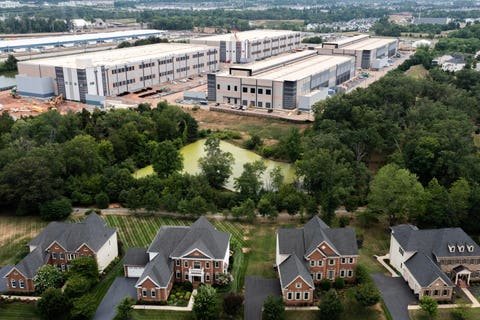
Across the U.S., AI data centers are scaling from megawatts to gigawatts. Utilities can’t connect capacity fast enough, so developers are buying power plants, cutting bespoke utility deals, and building on-site generation.
“From MW to GW” isn’t a slogan. It’s the new design brief for AI infrastructure.
Why it matters: Power has become the critical path for AI. This shifts where facilities get built, who captures the margin, and how consumer rates evolve. It also reframes climate commitments: 24/7 clean power procurement is now table stakes, not press-release dressing.
The Actual Move
Here’s what the ecosystem is actually doing right now:
- Data centers are moving off-grid or partially off-grid.
- Developers are siting on or near dedicated generation and even constructing their own plants.
- On-site gas and microgrids are being used as bridges until transmission catches up.
- Utilities are retooling for AI-era loads.
- Interconnection queues are long; substation upgrades and transmission builds are accelerating.
- Utility capex plans are rising, with rate cases likely pushing some costs to consumers.
- AI compute demand is bending the U.S. load curve.
- By 2026, AI data centers are projected to consume tens of terawatt-hours annually, with rapid growth thereafter.
- Goldman and others frame the power grid—not chips—as the next bottleneck.
- Tech giants are balancing growth with climate goals.
- More 24/7 carbon-free procurement, long-dated PPAs, and interest in geothermal and nuclear-backed supply.
- Expect hybrid stacks: wind/solar + firming (gas, nuclear, geothermal) near campuses.
- Geography is reshuffling.
- Northern Virginia remains hot, but constraints are pushing builds to Georgia, Ohio, Texas, and the Midwest.
- China’s build speed is a wake-up call: permitting and grid timelines are a U.S. competitiveness risk.
“AI data centers, desperate for electricity, are building their own power plants.”
“Consumers are paying the price” when utilities re-rate to fund grid upgrades.
The Why Behind the Move
AI loads are bursty, dense, and growing faster than grid capacity. Builders are optimizing for certainty of power, not just cost per kWh.
• Model
- Larger multimodal models and always-on inference increase steady load.
- Training runs require guaranteed power windows and resilient backup.
• Traction
- GPU supply is catching up; the new blocker is substation and transmission lead times.
- AI-native workloads shift data centers from “IT facilities” to “industrial power users.”
• Valuation / Funding
- Power certainty de-risks capex and brings down WACC for hyperscale projects.
- Assets with interconnection rights and firm supply trade at a premium.
• Distribution
- Owning or controlling power becomes distribution: the ability to deliver compute consistently.
- Interconnection queues and PPAs function like exclusive channels.
• Partnerships & Ecosystem Fit
- Utilities, IPPs, oil & gas, geothermal, and nuclear operators are now strategic partners.
- Expect more JV campuses and offtake agreements bundling land, load, and firm power.
• Timing
- The grid’s multi-year timelines clash with AI’s quarterly step-changes.
- Interim on-site generation is a rational bridge strategy.
• Competitive Dynamics
- Hyperscalers with 24/7 clean portfolios gain an enterprise trust edge.
- Second-tier players will differentiate on siting, waste heat reuse, and power quality.
• Strategic Risks
- Cost pass-through to consumers can trigger regulatory and political pushback.
- Overbuild risk if AI demand forecasts overshoot.
- Climate credibility risk if “temporary” fossil solutions become permanent.
Here’s the part most people miss: interconnection rights and 24/7 clean power contracts are becoming the real moats in AI infrastructure.
What Builders Should Notice
- Power is product. Treat electricity availability and quality as a core design constraint.
- Efficiency is leverage. Optimize inference, quantize models, and schedule jobs to off-peak windows.
- Location is strategy. Co-locate where firm, clean power is provable—don’t chase only cheap land.
- Procurement is a moat. Lock 24/7 clean PPAs or on-site firming; announce with credibility, not vibes.
- Plan for water and heat. Thermal design, air vs. liquid cooling, and heat reuse will determine permits and PR.
Buildloop reflection
The moat isn’t the model. It’s the megawatt you can trust at 2 a.m.
Sources
- Yahoo Finance — Big Tech’s AI ambitions are remaking the US power grid. Consumers are paying the price.
- Data Center Knowledge — From MW to GW: How AI Is Forcing a Complete Rethink of Data Center Power
- LinkedIn — AI transforms power grid, utilities scramble to keep up
- Leyline Capital — AI Data Centers, Desperate for Electricity, Are Building Their Own Power Plants
- Business Insider — AI’s Next Bottleneck Isn’t Just Chips — It’s the Power Grid
- Fortune — AI experts return from China stunned: The U.S. grid is so …
- Forbes — How AI Data Centers Are Reshaping America’s Electric Grid
- Facebook (Pelican Institute) — Data centers & AI are driving massive new energy demand
- CryptoRank — AI boom forces tech giants into power scramble, straining climate goals