What Changed and Why It Matters
India is shifting AI infrastructure closer to users. The bet: micro data centers (MDCs) for low‑latency inference at city and campus edge.
Two signals stand out. First, capital is flooding into AI data centers. Second, planners are building smaller, distributed sites alongside hyperscale campuses. The goal is to cut latency, reduce backhaul, and anchor workloads near demand.
Reports show the country’s capacity ramping fast. Live IT load is estimated around 1.7 GW, with another 1.3 GW under construction and 3.2 GW in advanced planning. The micro data center segment alone is projected to grow at 18.55% CAGR through 2032.
Here’s the pattern: inference is becoming a real-time service. That makes network distance and power economics decisive.
What most people miss: Inference is a network problem as much as a compute problem.
The Actual Move
India’s AI buildout is widening from hyperscale training sites to micro data centers designed for inference.
- Market growth: Analysts tracking India’s micro data center market project expansion from roughly USD 153 million in 2023 to USD 748 million by 2032, at an 18.55% CAGR.
- Capacity pipeline: Industry trackers cite ~1.7 GW live AI data center IT capacity, ~1.3 GW under construction, and ~3.2 GW in advanced planning.
- National trajectory: Broader data center capacity in India is projected to roughly double from 0.9 GW in 2023 to about 2 GW by 2026.
- Capital commitments: Coverage highlights billionaires backing massive AI infrastructure, including a reported $100 billion Adani bet tied to data centers and partnerships with major cloud platforms.
- Public markets signal: ESDS Software Solution Ltd. emerged as an investor favorite, with Bloomberg noting a surge of over 300% since listing on the data‑center/AI narrative.
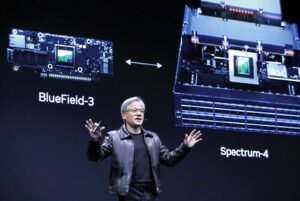
- Stack standardization: NVIDIA is pushing a full data‑center platform—GPUs, CPUs, networking—for AI training and inference, shaping how new Indian facilities are specified.
- Narrative momentum: Industry voices position India as an “AI inference hub,” leaning on scale, labor cost advantages, and the ability to couple facilities with cleaner power.
“India is the winning bet in 2026: Massive scale and $1/hr labor. AI doesn’t live in the cloud; it lives in massive buildings that need cheap …”
- Ecosystem debate: Builders and operators are openly discussing why companies are racing to build massive AI data centers, underscoring inference cost, latency, and supply constraints.
The Why Behind the Move
India’s micro data center push fits a simple reality: inference wants proximity. Training loves scale; inference needs locality.
• Model
Distributed MDCs host GPUs or accelerators near user clusters. They minimize round‑trip latency, reduce backbone egress, and improve quality for real‑time agents, voice, and multimodal UX.
• Traction
Pipeline numbers and investor moves indicate sustained demand. The expansion beyond hyperscale suggests operators are designing for heterogeneous, latency‑tiered workloads.
• Valuation / Funding
Big capital is moving first. Large conglomerates and listed players are signaling confidence. The market is rewarding credible capacity plans and power procurement strategies.
• Distribution
MDCs ride existing fiber, 5G densification, and city‑edge land. Distribution is won by partnering with telcos, ISPs, campuses, and municipal authorities.
• Partnerships & Ecosystem Fit
The stack converges around accelerated computing (NVIDIA and peers), cloud interconnects, and long‑term renewable PPAs. Hyperscalers, clouds, and local operators co‑locate and federate capacity.
• Timing
Inference workloads are shifting from batch to interactive. As agents go real‑time, latency budgets shrink. Building near demand becomes a competitive necessity, not a luxury.
• Competitive Dynamics
- Hyperscale vs. micro isn’t either/or. Training centralizes; inference distributes.
- Local operators with land, permits, and grid access can move faster.
- Data localization and sovereign cloud needs strengthen domestic footprints.
• Strategic Risks
- Power availability and grid reliability. Water and permitting constraints in key metros.
- Overbuild if model efficiency, on‑device AI, or specialized silicon reduce footprint needs.
- Vendor concentration risk around a few accelerator suppliers.
- Carbon intensity and ESG scrutiny if renewable integration lags the buildout.
What Builders Should Notice
- Build for latency tiers. Put inference close; keep training centralized.
- Design power‑first. Grid, PPAs, and cooling strategy are your real moats.
- Partner to distribute. Telcos, campuses, and cities unlock edge sites fast.
- Standardize the stack. Use proven accelerators and networking to compress time‑to‑revenue.
- Monetize reliability. SLA, uptime, and predictable latency beat raw TFLOPs.
Buildloop reflection
The moat isn’t the model—it’s where and how you run it.
Sources
- NPOD — Micro Data Center : Top 10 Providers Compared (2026)
- Reddit — Why are companies racing to build massive AI data centers
- LinkedIn — India’s AI Inference Hub: Unlocking Carbon-Free Data …
- Yahoo Finance — The Billionaires Backing India’s Massive AI Infrastructure …
- Bloomberg — Data-Center Bet Makes ESDS One of India’s Best New Listings
- Ameztrix — Top 10 AI Data Centers in India (2026): GPUs & Capacity
- Wikipedia — Data centre industry in India
- NVIDIA — Data Centers for the Era of AI Reasoning