What Changed and Why It Matters
Saskatchewan is quietly aligning research, startup supports, and founder education around an AI-first approach. The province’s innovation arm now routes teams through clear stages of support, while community programming spotlights commercialization wins. This is not a press release. It’s a pattern.
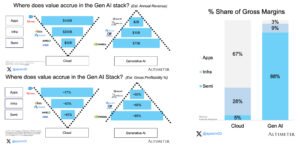
Globally, the AI playbook has shifted. Classic SaaS rules break under new economics, distribution paths, and data moats. Strategy conversations have moved from “add AI” to “build AI-first.”
“AI is transforming every layer of company-building, from how ideas are validated to how teams are formed, how products are shipped.”
The signal: ecosystems that internalize this new playbook will compound faster. Saskatchewan is moving early.
Here’s the part most people miss. AI-first is not just a product choice. It’s an org design, data, and go-to-market decision that rewrites the entire growth engine.
The Actual Move
- Ecosystem scaffolding in Saskatchewan
- Innovation Saskatchewan’s Get Started pathway guides founders on when to tap support for scaling, advancing innovations, and sharing solutions. Programming and funding map to the build stages.
- The province highlighted a Research Strategy and community events like Inside Innovation to tighten the loop from research to startups.
- Public comms emphasize year-over-year momentum and support for SK startups.
- Global playbook inputs Saskatchewan is adopting
- Defensibility from day one:
“AI-first start-ups must establish defensible advantages from the beginning, such as proprietary data [and] deep domain knowledge.”
- Rethink the SaaS template:
“AI is a $3 trillion-plus opportunity for software companies. To seize it, CEOs must put aside the SaaS playbook and return to a startup [mindset].”
- New growth math:
“The standard SaaS growth playbook breaks in three places when you apply it to an AI product. Inference cost makes free trials irrational.”
- Founder lessons from the field:
“The winners in this next chapter of startups won’t just use AI to make things faster or cheaper, they’ll leverage it to make their businesses [do things that weren’t possible].”
- Culture change, not feature work:
“AI is not just a feature [— it’s how you build].”
- Founder education and playbook content
- New guides focus on reducing failure rates, validating unconventional ideas, and getting the AI-first advantage into the company from day one.
The Why Behind the Move
Saskatchewan is optimizing for speed-to-proof and resilience-by-design. The global AI market context now rewards ecosystems that help founders make the right trade-offs early.
• Model
AI-first companies are data systems first, apps second. Expect hybrid models that blend product, services, and workflow integration. Usage-based pricing and value-linked packaging are more natural than per-seat.
• Traction
Move past vanity metrics. Track data pipeline quality, model performance in production, human-in-the-loop efficiency, and time-to-onboard a new dataset or customer workflow.
• Valuation / Funding
Investors favor proprietary data access, hard-to-replicate workflows, and distribution leverage. Saskatchewan’s research linkages and sector depth (e.g., ag, resources, public sector) can create differentiated data advantages.
• Distribution
Embed into existing tools and processes. Land with a workflow wedge, prove outcomes, then expand. Self-serve freemium often breaks under inference costs—guided demos and ROI-led pilots convert better.
• Partnerships & Ecosystem Fit
University labs, provincial programs, and domain incumbents become data partners and design partners. Saskatchewan’s structured supports and events increase surface area for these deals.
• Timing
Models are improving while costs remain volatile. The opportunity is to compound learning now, before categories harden and distribution locks up.
• Competitive Dynamics
The moat isn’t the model. It’s access to high-signal data, rights to use it, and trusted integration into regulated or safety-critical workflows. Global platforms will compete on tooling; regions can compete on domain and data.
• Strategic Risks
- Inference unit economics can erode margins fast.
- Data rights and governance can stall deals.
- Over-indexing on a single model/provider raises platform risk.
- “AI-washing” delays real product-market fit. Saskatchewan’s answer: staged supports, domain focus, and evidence-first pilots.
What Builders Should Notice
- Design moats around data rights, not just data volume.
- Inference costs change GTM. Freemium often dies; guided ROI wins.
- Ship workflow wedges. Then expand on trust and outcomes.
- Treat AI as org design: pipelines, evals, and ops are core product.
- Ecosystem leverage matters. Pair with research, incumbents, and public programs early.
Buildloop reflection
“AI rewards speed — but only the kind disciplined by data rights and unit economics.”
Sources
- StartStak — StartStak Articles | The Founders AI First Playbook
- World Economic Forum — The playbook for building a successful AI-first start-up
- Boston Consulting Group — The AI-First SaaS Company: Rethinking the Playbook
- YouTube — 03 JUNE 26 | Growth Stage | The Startup Playbook Has …
- Crunchbase News — A Founder’s Lessons On Building AI-Native Startups
- The Remarkable Agency — The AI Startup Growth Playbook: How Early-Stage AI …
- Innovation Saskatchewan — Get Started
- YouTube — The AI Playbook Every Leader Needs: A Chat With Adam …
- Innovation Saskatchewan (Instagram) — 🌟 A Year of Innovation & Impact From releasing …