What Changed and Why It Matters
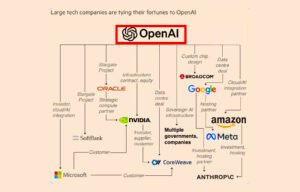
AI demand outpaced supply. GPUs were scarce, power was tighter, and enterprises shifted from on-demand cloud to locked-in capacity.
CoreWeave rode that shift. It pre-sold compute before it existed, financed hardware at scale, and secured power faster than incumbents.
Here’s the signal: the next phase of AI is not model-first. It’s capacity-first. Buyers want guarantees on GPUs, networking, and megawatts — for years.
“The best deals were done in 2020 to 2022. Now, valuations are sky high. The easy money is made. But the infrastructure play is still early.”
“Everyone buys Nvidia for compute. Nobody asks where the data lives.”
“The quiet AI winner was built on CPUs.”
Those lines capture the turn. Compute, power, storage, and connectivity — not just models — are becoming the bottlenecks and the profit centers.
The Actual Move
CoreWeave’s playbook was simple and fast:
- Capacity pre-sales. Multi-year reservations for Nvidia-class GPUs (H100/H200 and successors), bundled with low-latency networking and managed orchestration. Contracts de-risked buildouts and created a visible backlog.
- Finance-first scaling. Large, structured debt facilities to buy GPUs and stand up new regions quickly, converting demand into supply without waiting on equity rounds.
- Power as product. Aggressive site selection and power procurement to shorten time-to-megawatts. Location, cooling, and interconnect decisions centered on delivering sustained, high-density AI loads.
- Specialized cloud. A Kubernetes-native GPU cloud with fast spin-up, tailored SLAs, and direct-to-engineer support for training and inference teams.
- Ecosystem leverage. Tight alignment with Nvidia’s roadmap and adjacent infra vendors, while acting as an overflow option when hyperscalers faced constraints.
Around this, the broader market showed its hand:
- Commentary points to hyperscaler backlogs and long build timelines for new power — a sign that near-term capacity from specialists can clear urgent AI workloads.
- Storage and networking names surged as data gravity and IO became the hidden tax on AI performance.
- Even CPUs (Intel) re-entered the chat as enterprises optimized total cost of ownership across mixed AI and non-AI workloads.
“Backlog of Azure orders it cannot fulfill because [power buildouts take longer than demand ramps]. Gas turbines take years.”
“Inference costs exceed revenue, liquidity is freezing, and power is the constraint.”
Together, this created a window. CoreWeave met committed demand with committed supply — and the backlog compounded.
The Why Behind the Move
Zoom out and the pattern becomes obvious: when capacity is scarce, distribution is the contract — not the product page.
• Model
Specialized, vertically aware AI cloud. Opinionated on GPUs, interconnect, scheduling, and service quality. Built for training and inference, not generic workloads.
• Traction
Long-duration reservations from model labs and enterprises that need predictable throughput. Backlog becomes the traction metric — not monthly credits burned.
• Valuation / Funding
Structured debt unlocks scale without dilution. Pre-sold capacity lowers risk for lenders and accelerates hardware procurement cycles.
• Distribution
Direct contracts and ecosystem referrals. When GPU scarcity rules, procurement teams prioritize guaranteed capacity over unit price.
• Partnerships & Ecosystem Fit
Aligned with Nvidia’s roadmap and data center operators, plus power providers and dark fiber. The moat isn’t just hardware — it’s vendor priority, installation slots, and megawatt access.
• Timing
Scarcity drove switching costs down and urgency up. While others debated models, CoreWeave sold time-to-GPU and time-to-megawatt.
• Competitive Dynamics
- Hyperscalers: massive balance sheets, but constrained by power, internal prioritization, and multi-tenant complexity.
- Specialists: faster siting, focused SKUs, and clearer SLAs for AI teams.
- Adjacent winners: storage, networking, and power equipment vendors riding the same curve.
• Strategic Risks
- Power timelines: grid interconnects and permitting can slip; off-by-one delays cascade into lost bookings.
- Supply normalization: when GPU supply catches up, pricing compresses and contract terms harden.
- Vendor concentration: heavy reliance on a single GPU roadmap amplifies supply and pricing risk.
- Demand whiplash: if inference unit economics lag, some customers may resize or defer capacity.
“Here’s the part most people miss: capacity is closing the gap faster than software is monetizing it.”
What Builders Should Notice
- Sell the bottleneck. In AI, the scarce input sets the margin. Today that’s power-dense compute and interconnect.
- Pre-sell outcomes, not instances. Reservations de-risk scale and improve financing terms.
- Power is product. Site selection and megawatts are now core roadmap items, not facilities footnotes.
- Distribution is contractual. In scarcity markets, capacity guarantees beat glossy features.
- Time beats size. Speed to secure supply chains compounds faster than generic scale.
Buildloop reflection
“Capacity is the new API. Own it, or rent it from those who do.”
Sources
Instagram — Everyone chased GPUs 💸 The quiet AI winner was built …
Instagram — Five tech giants likely spent a combined $100 billion on AI …
Instagram — @cathiewoodark (@arkinvest), on @google, @openai & @ …
Instagram — Stargate stole the show. STG surged about 35.8% to lead …
Instagram — Everyone’s busy debating Anthropic vs OpenAI vs Gemini …
ALP Technologies — Big Crunch – Anatomy of Death
PhilStockWorld — Titanic Tuesday – Iceberg Ahead! Open AI’s CFO Confirms our …
Instagram — Brooker Belcourt isn’t your dad’s money manager. He spent …
Instagram — NVIDIA highlighted a software company as a critical player …