What Changed and Why It Matters
Enterprises have moved past AI demos. They want real outcomes in production. But deals are stalling and pilots aren’t scaling. Across the ecosystem, the sticking points are consistent: data fragmentation, weak governance, unclear ROI, and change management.
Industry voices converge on the same pattern. CIO agendas emphasize risk and adoption. Practitioners argue the models are good enough; integration and operations are not. Go-to-market stalls at budget committees, where value, risk, and ownership must be obvious.
Here’s the part most people miss: enterprise AI doesn’t stall at the model. It stalls at the org chart.
The signal: as agentic and production-grade AI rises, companies are shifting from model picks to data, orchestration, and governance. The winners will make value and safety legible to CFOs, CISOs, and end users.
The Actual Move
Across the sources, four concrete moves are emerging:
- From batch to streaming-aware data. Leaders argue that batch-centric, fragmented systems choke AI. Real-time data streaming and event architectures unlock dependable context and lower latency for production use.
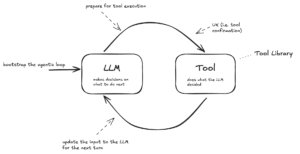
- From pilots to orchestration. AI Business spotlights orchestration as the bridge from experiments to production: consistent routing across models, retrieval pipelines, guardrails, monitoring, and rollback.
- From IT projects to owned products. Builders stress that AI efforts fail when no business leader owns outcomes. Tie work to real KPIs, not model benchmarks. Design for the workflow, not the demo.
- From hype to budget clarity. Deals die at approval when value is fuzzy. Teams that document cost, risk, compliance, and payback windows earn greenlights. WorkOS cites Gartner expecting a large share of agentic AI projects to be canceled amid unclear value and rising costs—proof that CFO scrutiny is rising fast.
A pilot isn’t a product. A model evaluation isn’t a business case. Treat them differently.
The Why Behind the Move
• Model
Models are increasingly commoditized for many enterprise tasks. Model choice still matters, but orchestration, retrieval, and evals matter more. Swapping models is easier than refactoring data or change management.
• Traction
Traction appears when AI lands inside existing workflows: tickets, docs, CRMs, IDEs, ERPs. Adoption follows trust, latency, and accuracy, not just novelty. User fear and uncertainty remain blockers; training and co-pilot patterns reduce resistance.
• Valuation / Funding
Capital favors proof over promise. CFOs want defensible ROI, cost ceilings, and risk controls. Rising cancellation rates for complex agentic projects reflect this shift. Teams that quantify time-to-value and operational savings keep budgets alive.
• Distribution
Distribution beats model quality. Land where work already happens—within platforms teams live in. Partner with hyperscalers, data clouds, and enterprise apps to shorten security reviews and procurement cycles.
• Partnerships & Ecosystem Fit
Integrate with the enterprise spine: identity, data platforms, observability, and legal/compliance. Fit into existing controls, don’t replace them. This is how trust compounds.
• Timing
Agentic workflows are early but expensive to run and govern. Regulations and internal risk frameworks are tightening. Shipping “governance by design” is now a timing advantage, not a tax.
• Competitive Dynamics
Platform consolidation is underway. Point solutions without strong distribution or ROI narratives will struggle. Orchestration and data control layers are becoming the new system of record for AI.
• Strategic Risks
- Hallucinations without measurable evals
- Data leakage and untracked prompts
- Cost sprawl from uncontrolled usage
- Vendor lock-in that blocks future upgrades
- Change fatigue without clear ownership
The moat isn’t the model—it’s the control plane: data, orchestration, governance, and distribution.
What Builders Should Notice
- Sell the workflow, not the model. Own a business outcome with clear KPIs.
- Make ROI legible to budget owners. Map risk, cost, and payback on one page.
- Orchestrate, don’t overfit. Design for multi-model routing and easy swaps.
- Govern by default. Add evals, red-teaming, audit logs, and access controls early.
- Stream context. If your data isn’t fresh, your AI won’t be trusted.
Buildloop reflection
In enterprise AI, proof beats promise. Every time.
Sources
- CIO — Why enterprise AI initiatives stall — and what CIOs can do …
- LinkedIn — Oliver Bussmann’s Post – Why enterprise AI keeps stalling
- AI Business — Why Enterprise AI Stalls Before It Scales
- Medium — Why Most Enterprise AI Efforts Stall — and How to Fix It
- Reddit — Enterprise AI has an 80% failure rate. The models aren’t …
- The Pedowitz Group — Why Do Enterprise Deals Stall at Budget Approval? The AI Visibility Factor Most Teams Miss
- WorkOS — Why most enterprise AI projects fail — and the patterns that …