What Changed and Why It Matters
AI isn’t just a software story anymore. Hardware is back at the center.
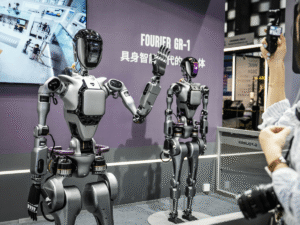
Startups are racing to find the default AI interface. Earbuds are emerging as a serious bet, with sensors, voice, and constant presence that phones and laptops can’t match. AI‑ready PCs and edge devices are also maturing fast with NPUs and on‑device inference.
This is where device designers enter. They see a clearer path to differentiation through industrial design, sensors, latency, and daily rituals — not just through a new chat UI.
Here’s the part most people miss: centralization in models is pushing decentralization in interfaces. When the models converge, the UX and device become the moat.
“The moat isn’t the model — it’s the distribution.”
The Actual Move
- Earbuds as the AI edge. New “earable” startups are building headphones and buds that handle voice agents, real‑time translation, and even biosensing from the ear. The goal: an always‑on assistant with intimate context and low friction, packaged in a device people already wear daily.
- AI‑ready devices hit mainstream. Laptops and endpoints now ship with NPUs that accelerate on‑device models. For startups, this unlocks faster, private inference, lower cloud bills, and new offline experiences.
- Founders retool how they build. Thought leaders point to a future where the biggest winners control compute, data, and distribution. Startups that depend on a single API and a chatbox UI risk getting outcompeted.
- UX is being rewritten. AI changes flows, not just features. The winning products design around human trust, context, and assistive workflows — not generic prompts.
“AI that amplifies people beats AI that replaces them.”
- The market is self‑correcting. Many AI apps are thin wrappers around the same models. As costs normalize and quality converges, undifferentiated companies will fade. Devices and distribution give startups a shot at durability.
The Why Behind the Move
• Model
APIs are a commodity. On‑device inference plus sensor streams (voice, motion, biometrics) create proprietary context. That’s a real moat.
• Traction
Earbuds and laptops enjoy massive installed bases. Minimal behavior change, daily usage, and habitual surfaces make them ideal for AI.
• Valuation / Funding
Capital flows to infra giants. Startups win by being capital‑efficient: lean models at the edge, smaller clouds, and faster payback through hardware‑plus‑software bundles.
• Distribution
Hardware opens channels beyond app stores: retail, carriers, OEM bundles, and accessories. Ship a device, own the relationship.
• Partnerships & Ecosystem Fit
Chipmakers, OS vendors, and audio brands are eager for AI‑native use cases. Strategic alliances can compress time to market and reduce risk.
• Timing
We’re early, but the curve is turning. NPUs are standardizing. Edge inference is usable. Hype is giving way to real revenue for those who deliver utility.
• Competitive Dynamics
Big tech dominates models and clouds. Startups can out‑execute on specific workflows, latency, privacy, and form factors big platforms won’t prioritize.
• Strategic Risks
Hardware margins are thin. Certification, reliability, and support are hard. Privacy expectations are high. Without a clear “why this device,” products become novelties.
“If your product is just a wrapper, you’re walking into a grinder.”
What Builders Should Notice
- Own a surface. Devices, sensors, and rituals beat generic chat UIs.
- Use on‑device inference strategically to cut cost and latency.
- Bundle workflows, not features. Design around outcomes, not prompts.
- Distribution is a strategy. Partner with OEMs, carriers, and retail.
- Treat trust as core UX. Private by default, clear controls, fast recovery.
Buildloop reflection
“Interfaces pick the winners long before models do.”
Sources
- Yahoo Finance — From music to mind reading: AI startups bet on earbuds
- andrewchen (Substack) — AI will change how we build startups — but how?
- Reddit — Everyone’s chasing AI startups, but I think the next big …
- Medium — 99% of AI Startups Will Be Dead by 2026 — Here’s Why
- BizTech Magazine — What Kind of AI-Ready Devices Do Startups Need?
- World Economic Forum — How founders are shaping the future of startups with AI
- UX Collective — AI will kill most startups — and that’s a good thing
- Netguru — How AI Is Changing the Landscape of UX and Product Design
- Elad Gil (Substack) — Early days of AI (and AI Hype Cycle)