What Changed and Why It Matters
Enterprise AI moved from pilot to production. Now the hard part begins: control.
Teams aren’t just calling OpenAI anymore. They’re juggling Anthropic, Google, Meta, private LLMs, and on‑prem inference. Security and CFOs want one place to set policy, measure usage, and switch models without rewrites.
That “one place” is the LLM gateway. Think API gateway meets AI control plane. It sits between your apps and any model, enforcing safety, routing requests, metering spend, and logging everything.
The strategic shift: enterprises don’t want a model. They want a control plane.
Signals are clear across the stack. Security leaders advocate egress LLM gateways to lock down secrets and govern traffic. MLOps platforms publish evaluation criteria. Vendors benchmark “agentic” workloads. VCs call the gateway “foundational.” And budget is following. Kong reports 72% expect to increase GenAI spend in 2025.
Here’s the part most people miss: the gateway isn’t just cost control. It’s how enterprises scale safely while avoiding lock‑in.
The Actual Move
Across essays, playbooks, and benchmarks, we see a coordinated market push to make the LLM gateway the enterprise standard:
- Risk and control plane framing: Practitioners describe LLM gateways as an enterprise risk layer that standardizes safety, spend, and model access across providers and self‑hosted models.
- Key management shift: Platform engineers argue API keys shouldn’t live in agents. Instead, secrets stay in infrastructure and traffic exits through an egress LLM gateway with policies and audit.
- Security-first posture: Investors detail a sprint to secure AI systems end‑to‑end, with Python now central to enterprise AI and governance patterns moving into production.
- Evaluation playbooks: MLOps vendors publish how to evaluate LLM gateways for scale—latency, throughput, failover, guardrails, observability, data control, and cost governance.
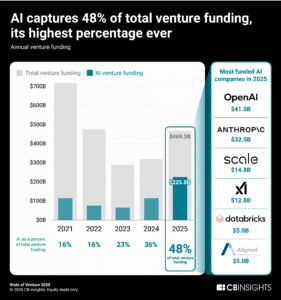
- Spend and adoption pressure: Enterprise surveys show budgets rising, forcing leaders to centralize routing, caching, and token policies.
- Agentic benchmarks: Platforms benchmark gateway readiness for agent use—streaming tool use, function calling, retries, state, and policy enforcement under load.
- Go‑to‑market narratives: VCs frame LLM gateways like API gateways in 2013: nerdy, vital, and about to be everywhere.
- Model selection context: Integration platforms publish guides for choosing the right LLM, reinforcing the need for model‑agnostic routing at the gateway.
- Strategy advice: Analysts and operators recommend deploying an LLM router as your gateway, investing in private LLMs, optimizing cost/perf, and avoiding vendor lock‑in.
What this adds up to: the LLM gateway is becoming the default abstraction for production AI, with the ecosystem converging on shared requirements—safety, routing, cost, and governance—across every model and environment.
The Why Behind the Move
This is a classic platform race. The winner sits in the center and controls standards, not just features.
• Model
Gateways normalize heterogeneous models. They handle prompt templating, tool/function calling, context windows, streaming, and retries. The best also support RAG pre/post‑processing and PII redaction inline.
• Traction
Budgets are rising and pilots are graduating. Governance bottlenecks now block scale, making gateways a prerequisite for production. Teams want a single endpoint per use case, not a different SDK per model.
• Valuation / Funding
This layer can price on usage, seats, or enterprise features. It benefits from data network effects—logs, evals, and routing heuristics improve with traffic—supporting durable enterprise value.
• Distribution
Security, platform, and data teams all have veto power. Winning vendors land through compliance and cost control, then expand via developer experience and model coverage. Attach to existing API gateway and observability workflows.
• Partnerships & Ecosystem Fit
Model vendors want easier adoption; gateways offer it. Integration with IDPs, KMS, SIEM, DLP, and data platforms is table stakes. Strong cloud/on‑prem stories unlock regulated industries.
• Timing
Model diversity is accelerating while compliance tightens. Python is the enterprise AI backbone, so infra needs to fit that workflow. The moment favors pragmatic control planes over bespoke app rewrites.
• Competitive Dynamics
- API management incumbents are extending into AI gateways.
- MLOps/AI platforms ship gateways to protect their position.
- Data integration players add routing to stay relevant.
- Security startups push egress control and policy-as-code.
Expect overlap. The defensible edge will be policy depth, agentic reliability, and zero‑drama integration with enterprise stacks.
• Strategic Risks
- Commoditization: basic proxying and routing become features everywhere.
- Lock‑in backlash: buyers want reversible choices; gateways must be portable.
- Agentic stress: tool use and long‑running flows expose latency and state issues.
- Privacy/regulation: data residency and redaction must be provable, not promised.
The moat isn’t the models you support—it’s the governance you standardize and the outages you prevent.
What Builders Should Notice
- Make the gateway your AI choke point. Centralize egress, secrets, policies, and audit.
- Separate identity from keys. Use service identities and ephemeral tokens; keep API keys out of agents.
- Route by objective, not vendor. Optimize for latency, cost, and quality with policy-based routing.
- Treat guardrails as code. Safety, PII redaction, and jailbreak defenses belong in the gateway, not scattered in apps.
- Benchmark agent workloads. Test streaming, function calling, retries, and fallbacks under real load.
- Log everything. Traces, prompts, responses, and costs should flow to your SIEM/observability stack.
- Design for reversibility. Avoid provider lock‑in with portable abstractions and standard schemas.
Buildloop reflection
Every durable AI program needs a control plane. Put it at the gateway.
Sources
- Medium — LLM Gateways for Enterprise Risk — Building an AI Control Plane
- LinkedIn — Why API keys for AI agents are a bad idea
- Insight Partners — The race to secure enterprise AI
- TrueFoundry — How should Enterprises evaluate LLM Gateway for Scale?
- Kong — 72% Say Enterprise GenAI Spending Going Up in 2025, …
- DataRobot — Not all AI gateways are built for agentic AI. Here’s how to tell.
- Tapestry VC — Picking a Horse out the Gate(way)
- SnapLogic — The Great LLM Race: Navigating the New AI Frontier in Enterprise
- The AI Enterprise — Who Will Win the LLM Wars
- GSD Venture Studios — Who Will Win the LLM War?