What Changed and Why It Matters
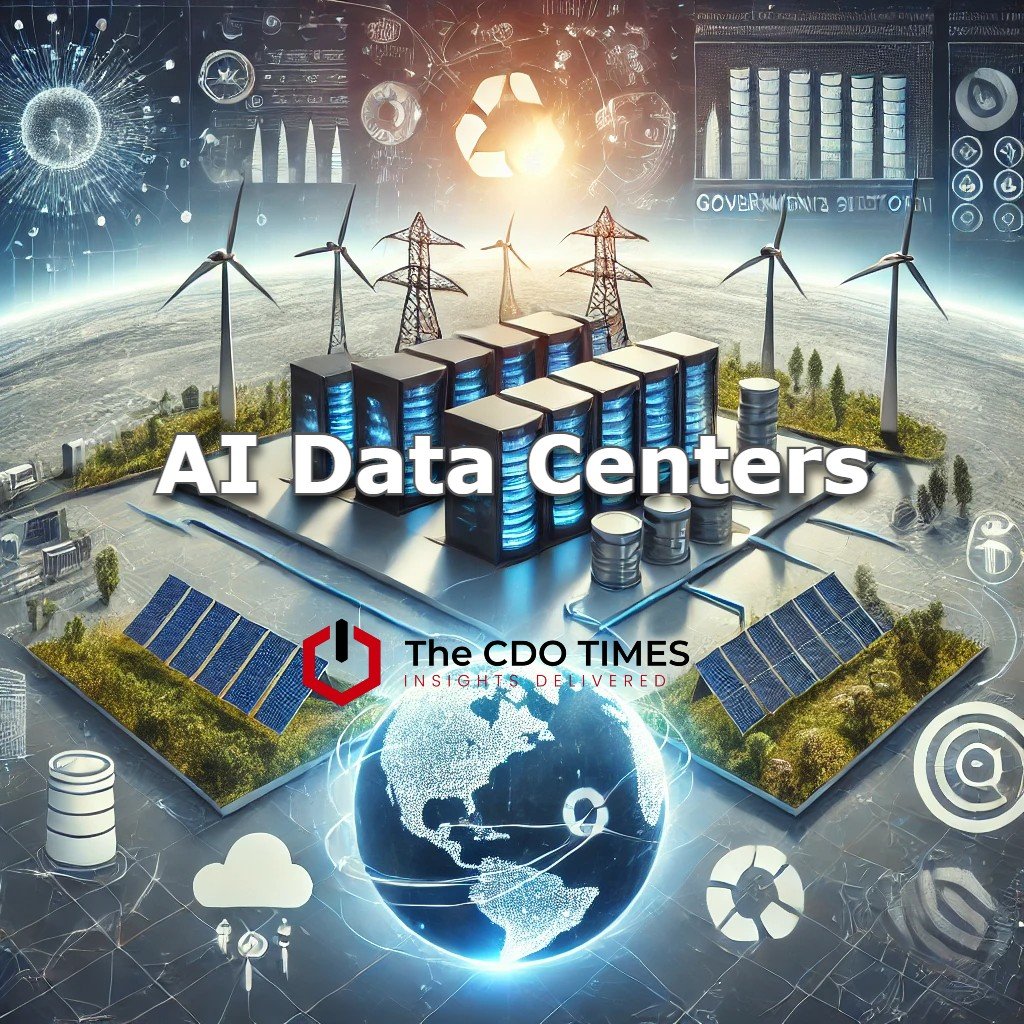
The AI boom hit a physical limit: electricity. GPUs aren’t the only constraint. Power is.
The signal is loud. Training and inference loads are scaling faster than grids. Costs are rising. Siting is getting political. Investors are rotating into power. And data centers are being redesigned around energy, not just compute.
“Google expects to spend $75 billion on AI infrastructure alone in 2025.”
“AI data centers could need ten gigawatts (GW) of additional power capacity in 2025, which is more than the total power capacity of the state of Utah.”
Zoom out, and the pattern becomes obvious. The next advantage isn’t just better models. It’s AI that finds power for AI—software and contracts that secure, schedule, and optimize energy supply in real time.
Here’s the part most people miss. The grid is not one market. It’s millions of local constraints. The best operators will turn power procurement, siting, and load orchestration into a product.
The Actual Move
Across players, the move is the same: go power-first.
- Hyperscalers and colo operators are redesigning data centers for higher power density and liquid cooling, and moving workloads to where electrons are cheapest and cleanest.
- Utilities are racing to add capacity and interconnects as AI clusters stress local grids and drive new rate cases.
- Investors are shifting toward generation, transmission, storage, and power electronics as the AI-capex flywheel spins.
- Builders are deploying software that sits at the interface of compute and power—siting models, PPA marketplaces, curtailment capture, and price-responsive scheduling of inference.
The data supports the pivot.
“Providing electricity to power-hungry data centers is stressing grids, raising prices for consumers, and slowing the transition to clean energy.”
“Our analysis suggests that demand for AI-ready data center capacity will rise at an average rate of 33 percent a year between 2023 and 2030 in a midrange …”
“AI-driven data centers are boosting electricity demand and costs, with U.S. residential rates up about 6.5% as utilities invest billions …”
“AI-driven data center power consumption will continue to surge, but data centers are not—in fact—that big a part of global energy demand.”
“Artificial intelligence has the potential to transform the energy sector in the coming decade, driving a surge in electricity demand from data centres …”
On the capital side, the theme is clear.
“The convergence of AI and electricity is reshaping the investment landscape, creating both acute challenges and compelling opportunities.”
And the opportunity extends beyond emissions.
“Building AI infrastructure around sustainable power can unlock benefits far beyond emissions reductions.”
The Why Behind the Move
Builders should read this as a strategy shift from “scale compute” to “control electrons.”
• Model
- Move from static capacity planning to dynamic, AI-driven energy orchestration.
- Forecast, source, hedge, and schedule power as a first-class system.
• Traction
- Load growth is undeniable. 10 GW incremental needs in 2025 is a now problem, not a 2030 one.
- 33% CAGR for AI-ready capacity compounds siting and interconnect backlogs.
• Valuation / Funding
- AI capex is bleeding into energy capex. That $75B signals durable spend on power-aligned assets.
- Capital is flooding into generation, storage, and grid-enabling hardware and software.
• Distribution
- Hyperscalers, colos, and utilities already own the channels. Partner, don’t fight.
- Embed into procurement workflows, DCIM, cloud schedulers, and ISO/RTO market interfaces.
• Partnerships & Ecosystem Fit
- Pair with renewable developers, battery operators, and utilities for firmed, flexible supply.
- Co-locate with stranded or curtailed generation; monetize flexibility as a grid service.
• Timing
- Interconnect queues and permitting are long. Software that accelerates siting and contracting wins now.
- Liquid cooling and higher rack densities make power planning urgent.
• Competitive Dynamics
- Hyperscalers will vertically integrate the biggest loads. Colos need software-led power advantages to stay competitive.
- New entrants can win by aggregating flexible demand and offering “power-first” AI capacity.
Strategic Risks
- Policy and community pushback on siting, water, and emissions.
- Power price volatility and single-node concentration risk.
- Overpromising firm supply without real hedges or storage.
What Builders Should Notice
- Power is a product now. Treat electrons like a core dependency, not an afterthought.
- Flexibility is the moat. Price-responsive inference and job shifting beat static capacity.
- Site selection is software. Use AI to model nodes, queues, curtailment, cooling, and community risk.
- Contracts are code. PPAs, tolling, and hedges stitched to schedulers unlock economics.
- Partner up the stack. Utilities, renewables, storage, and colos are your distribution.
Buildloop reflection
“Whoever controls the electrons controls the AI.”
Sources
- MIT Technology Review — We did the math on AI’s energy footprint. Here’s the story …
- MIT Energy Initiative — The multi-faceted challenge of powering AI
- EY — How AI can unlock new value in infrastructure
- RAND Corporation — AI’s Power Requirements Under Exponential Growth
- Cambridge Associates — VantagePoint: Electrifying Returns in the AI Era
- Deloitte Insights — As generative AI asks for more power, data centers seek …
- McKinsey & Company — AI data center growth: Meeting the demand
- ConstructConnect — AI-Driven Infrastructure is Coming – Who’s Paying for It?
- International Energy Agency — AI is set to drive surging electricity demand from data centres while offering the potential to transform how the energy sector works
- World Economic Forum — How AI infrastructure could help form a sustainable future