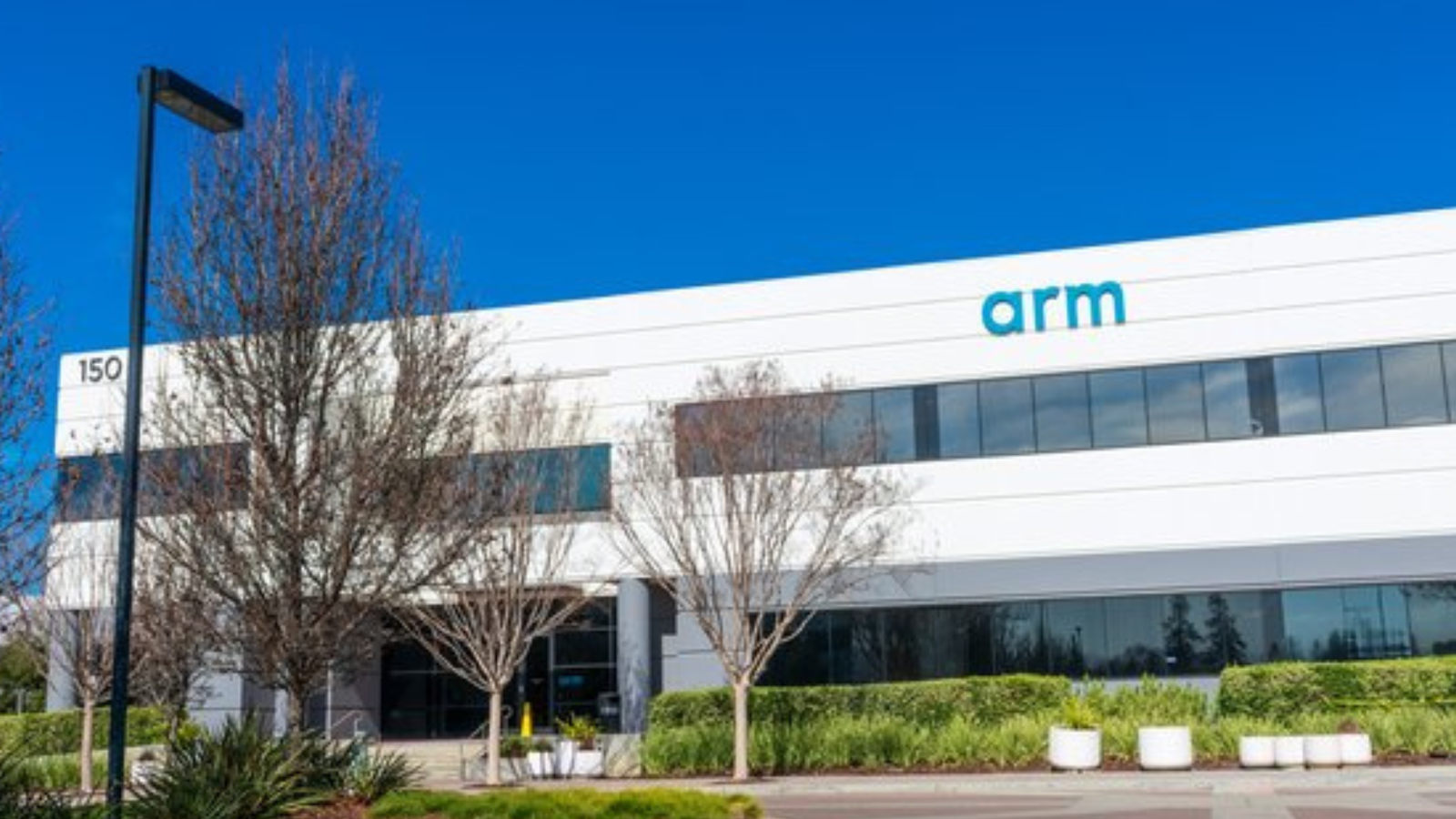
Arm is acquiring DreamBig, an AI networking chipmaker, for roughly $265 million.
Why it matters: AI scale is now gated by the network, not just compute. Whoever owns bandwidth and latency owns the cluster.
What changed — and why it matters
Training speedups are hitting a wall. Models get bigger. Clusters get denser. GPUs sit idle when packets stall.
Nvidia knew this early. Mellanox, NVLink, Spectrum-X — a full-stack fabric became part of its moat. Arm just made its move to close that gap.
This isn’t Arm chasing accelerators. It’s Arm buying the interconnect that makes every accelerator useful. That’s leverage.
Product angle — AI networking as the control point
DreamBig builds networking silicon aimed at AI-scale data centers — think high-radix switching, congestion control, and better utilization under RoCE/ethernet-like fabrics. The value isn’t a single chip. It’s the path to a system-level advantage.
Arm’s portfolio already powers the control plane in hyperscale (Neoverse CPUs, DPUs/SmartNIC IP, system IP). Folding networking silicon into that stack lets Arm:
- Package CPU + DPU + switch IP for partners building AI racks.
- Push reference designs that turn clusters into products, not parts.
- Reduce dependency on third-party fabrics where economics and roadmaps are opaque.
Hyperscalers want open, Ethernet-forward options. The Ultra Ethernet Consortium is a signal, not a slogan. If Arm can harden a performant, licenseable fabric, the market opens beyond any single GPU vendor.
Strategy and the business bet
- Price: ~$265M is small relative to Arm’s balance sheet and impact potential. It’s a talent + IP acceleration buy.
- Timing: Networking demand lags compute by ~12–18 months. We’re there now. Orders are shifting from “more GPUs” to “more throughput per watt”.
- Positioning: Arm doesn’t need to win top-to-bottom. It needs to make the non‑Nvidia stack viable and scalable.
- Risk: Partner friction. Broadcom, Marvell, and switch incumbents won’t cheer. Integration and productization speed are the test.
- Payoff: If Arm ships a credible fabric IP + reference rack design, it influences BOMs, software stacks, and margins for years.
Playbook parallels:
- Nvidia’s Mellanox bet created a defensible perf-per-dollar envelope.
- Microsoft bought Fungible to shrink data movement tax in the control plane.
- Intel’s Barefoot showed the cost of slow integration. Speed matters.
Founder lessons — build where the bottleneck lives
- Solve the coordination tax. Throughput wins over peak TOPS.
- Buy time, not headlines. $265M for a 2–3 year jump is cheap if it compounds.
- Bundle the system, not the part. CPU + DPU + switch + software.
- Own the interfaces. APIs and fabrics are where strategy becomes margin.
- Ship reference designs. Make adoption the default, not a project.
Quote this: “The fastest chip in a congested network is a slow system.”
What to watch next
- Arm + partners releasing open-ish reference racks for AI training/inference.
- Ethernet-based fabrics closing the gap with specialized interconnects (telemetry, congestion, in-network compute).
- A software story: congestion control, transport, and compiler/runtime hooks that treat the network as a first-class resource.
- Early lighthouse wins with hyperscalers or sovereign clouds that want Nvidia alternatives.
Buildloop reflection
Bold moves attract momentum. Arm didn’t buy a chip. It bought time — and a lane to turn AI networking into its moat.