1. The Context — Clarity Wins in No-Code Chaos
Five years ago, the no-code web-building space was an ocean of generic tools. Webflow made it powerful, Carrd made it accessible, but none married frictionless UX with strategic positioning quite like Typedream.
They didn’t chase features. They chased the next wave: creators who want to turn ideas into product faster (Notion-style), but sell, launch, automate, and connect—all inside one clean platform. That clarity was their unfair advantage.
2. Positioning as “Notion meets Webflow, without the complexity”
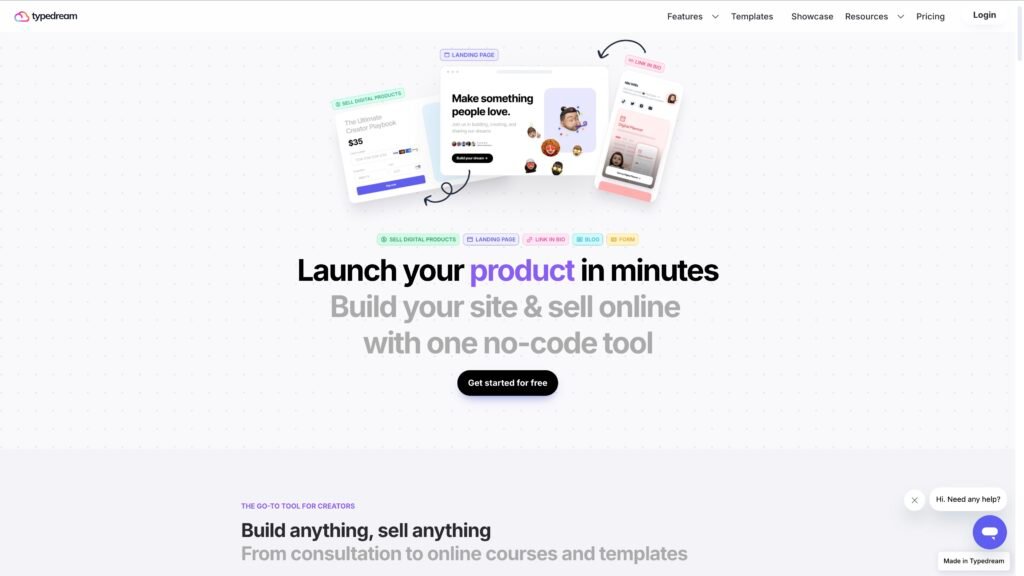
Typedream leaned into its Notion-like interface. You type / — and magic happens: forms, products, blogs, landing pages. It’s as visual as Notion, as effective as Webflow, priced like early SaaS.
That simple message resonated deeply with:
- Consultants selling digital products
- Indie creators building email-first tools
- Early product folks looking for rapid internal launch pages
By 2025, over 135,000 websites had been created, hundreds of digital products were selling, and dozens of creators were turning one-off templates into revenue-generating storefronts.
3. GTM: Doing More with Less
Typedream didn’t rely on sales teams or fertility funnels. They lean into:
- Templates that convert — actively designed for digital launches, link-in-bio tools, and mini-marketplaces.
- Creator shoutouts & shared case studies — each “Notion template sold 2K customers via Typedream landing page” tweet became their content piece.
- Community loops — asset packs, tutorials, blog shares, and a simple “build with Typedream” narrative.
Each of their GTM channels is symbiotic: power the creator, and the creator powers the brand back.
4. Pivoting Into AI, Just in Time
Typedream started non-AI, but quickly became the go-to tool in the AI builder boom:
- AI-created landing pages & site structure
- Copy generators baked into the builder UI
- Intelligent defaults for SEO, layout, and mobile responsiveness
They moved from “easy no-code site builder” to “AI-enhanced, creator-first hub” — a subtle shift that thickened their moat.
5. Results in Focus
There’s no official $25K/mo confirmed publicly — but the signals are strong. Typedream’s micro-revenue engine comes from:
- Monthly template launches
- Creator-first digital product sales
- Embed-as-a-link-in-bio bundles
- Paid landing page templates + plugin assets
This is a passive, compounding revenue model — exactly what solo builders and indie creators crave.
6. Buildloop Takeaways for Your Move
| Strategy | Insight |
|---|---|
| Position via existing identity | Blend familiarity (Notion) with new capability (AI UX) |
| GTM via creator success | Let your user’s wins do your marketing |
| Product as content | Launch landing page templates that become tools to sell beside your content |
| AI as an emergent layer | Let AI features enhance, not replace, your core UX & value |
Final Thought
Typedream didn’t chase revenue. They chased clarity + momentum:
“I want to build fast, sell quickly, look great — without thinking about tools.”
Want more founder breakdowns like this? Subscribe to Buildloop.ai 🚀